
- Home
- Products
- Solutions
- About
- Service
- Sustainability
- News
- Contact Us

Views: 0 Author: Site Editor Publish Time: 2026-02-27 Origin: Site


Isostatic graphite is crucial in the world of semiconductor manufacturing. But what exactly makes it so important for SiC single crystal growth?
In this article, we’ll explore the definition and properties of isostatic graphite, highlighting its role in producing high-quality Silicon Carbide (SiC) crystals.
You’ll learn how SIAMC Advanced Materials Co., Ltd. leads the way in establishing standards that ensure quality and consistency in this vital process.
Standards are essential in semiconductor manufacturing, particularly for materials like isostatic graphite. They ensure:
● Product Quality: Consistent quality across batches helps maintain reliability in applications.
● Consistency: Standards minimize variations, which is crucial for high-performance semiconductor devices.
● Performance and Yield: Adhering to standards can significantly enhance the yield of SiC single crystal growth, reducing defects and improving overall efficiency.
When we talk about SiC growth, the purity and properties of isostatic graphite directly influence the final product. High-quality isostatic graphite, like Isostatic Graphite, ensures optimal thermal management and structural integrity during the growth process.
In the realm of isostatic graphite, two key standards have emerged:
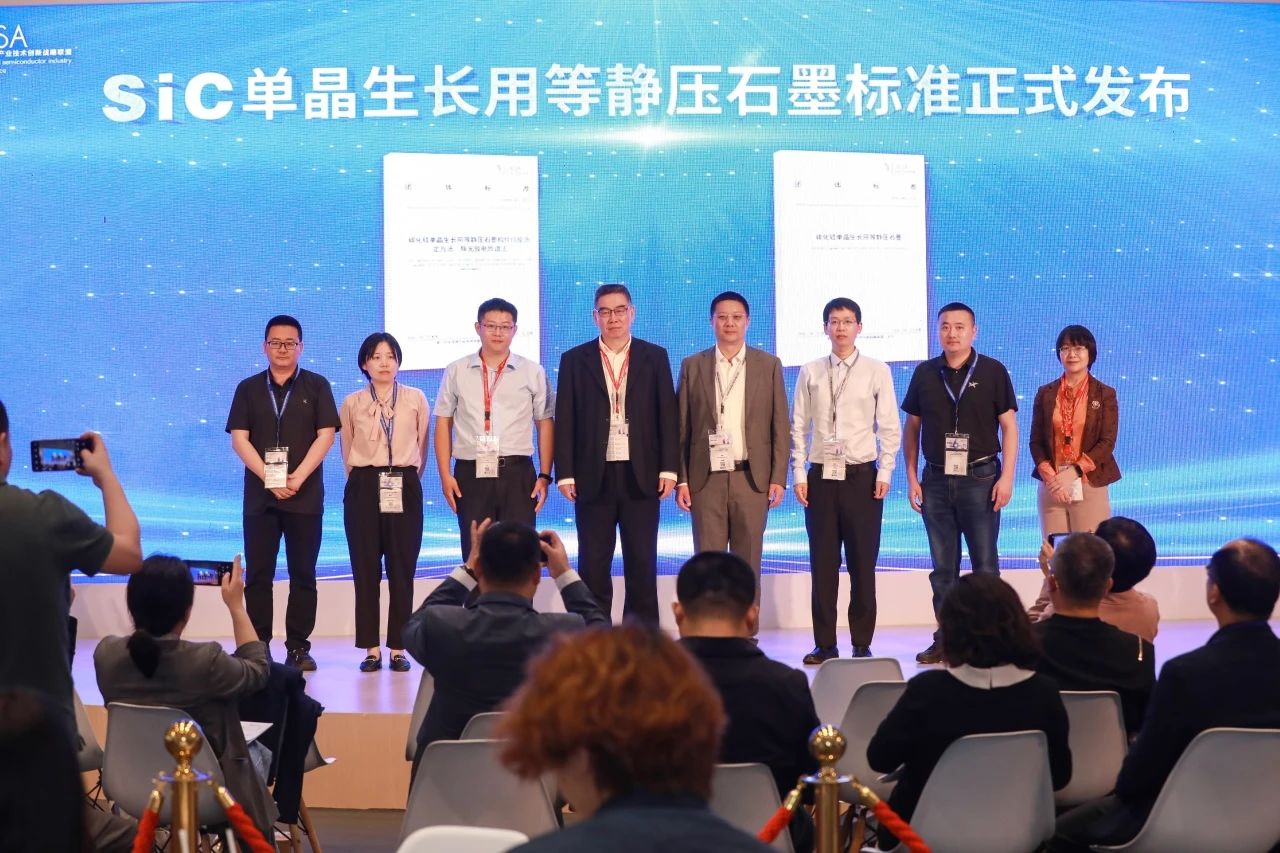
● T/CASAS 036—2025: This standard focuses on determining the purity of isostatic graphite components using advanced testing methods like glow discharge mass spectrometry.
● T/CASAS 048—2025: This outlines the overall quality requirements for isostatic graphite used in SiC single crystal growth.
These standards set clear benchmarks for manufacturers, ensuring that the materials meet stringent quality criteria necessary for effective SiC production.
When we look at international standards, such as ASTM and DIN, we find similarities and differences:
Standard | Focus Area | Key Features |
ASTM C781 | General graphite materials | Emphasizes chemical analysis and mechanical testing |
DIN 51914 | Graphite for industrial applications | Focuses on purity and performance |
T/CASAS 036/048 | Isostatic graphite for SiC growth | Specific to purity and quality in semiconductor applications |
SIAMC Advanced Materials Co., Ltd. has been instrumental in establishing these standards. Their leadership in formulating and participating in the development of 22 national and industry standards showcases their commitment to quality in the graphite sector.
SIAMC stands out not just for its products but also for its proactive approach to standardization. Here are a few highlights:
● National-Level High-Tech Enterprise: Recognized for its innovative capabilities and contributions to the industry.
● Participation in Standards Development: Active role in creating standards that govern the use of isostatic graphite, ensuring they align with international best practices.
● Collaboration with Research Institutions: Engaging with universities and research organizations to advance the science behind isostatic graphite and its applications.
By prioritizing these standards, SIAMC not only enhances its product offerings but also contributes to the overall growth and reliability of the semiconductor industry.
Purity is a critical factor in the performance of isostatic graphite, especially for applications in semiconductor manufacturing.
● Definition of Ultra-High Purity: Isostatic graphite must have a purity level of less than 5 parts per million (ppm).
● Importance of Purity: High purity helps prevent contamination, which is vital in sensitive environments like nuclear reactors and semiconductor fabrication. Contaminants can lead to defects in SiC crystals, affecting their overall quality.
When using materials like Isostatic Graphite, maintaining ultra-high purity ensures that the resulting SiC crystals have fewer defects and improved electrical properties.
Density and uniformity are vital characteristics of isostatic graphite, impacting its performance during SiC growth.
● Required Density: The standard density for isostatic graphite is at least 1.80 grams per cubic centimeter (g/cm³).
● Effects on Performance: Higher density ensures better thermal conductivity and stability during the growth process. This stability is essential for maintaining an even thermal gradient, which directly influences the quality of the SiC crystals produced.
Property | Requirement | Impact on Performance |
Density | ≥ 1.80 g/cm³ | Enhances thermal stability and conductivity |
Uniformity | High | Reduces variations in growth rates |
Matching the thermal expansion coefficient (CTE) of isostatic graphite with that of SiC is crucial for successful crystal growth.
● Importance of Matching CTE: If the CTE of the graphite does not align with SiC, it can lead to stress during rapid heating and cooling cycles.
● Consequences of Mismatched CTE: This mismatch can result in cracking or warping of the SiC crystals, severely affecting their structural integrity.
Using isostatic graphite with a compatible CTE minimizes these risks, ensuring that the crystals maintain their shape and performance characteristics throughout the growth process.
The grain structure of isostatic graphite plays a significant role in its machining and application performance.
● Significance of Fine Grain Structure: A fine grain size of 20 micrometers (μm) or less is ideal for isostatic graphite.
● Benefits for Machining: Smaller grains allow for better machining, resulting in smoother surfaces and improved finishes. This is particularly important for components like crucibles and seed holders used in SiC growth.
Grain Size | Requirement | Benefits |
Fine Grain | ≤ 20 μm | Enhances machining and surface finish |
By adhering to these performance standards, manufacturers can ensure that isostatic graphite meets the rigorous demands of SiC single crystal growth. This not only enhances the quality of the final product but also optimizes the entire production process, making materials like Isostatic Graphite indispensable in the semiconductor industry.
Standardization in the graphite industry has evolved significantly over the years. Initially, there were no uniform guidelines for graphite materials, leading to inconsistencies in quality.
● Evolution of Standards: As the demand for high-performance materials grew, especially in semiconductor applications, the need for standardized specifications became evident.
● SIAMC's Role: SIAMC Advanced Materials Co., Ltd. has played a pivotal role in leading these standardization efforts. As a national-level high-tech enterprise, they have focused on developing standards that align with both domestic and international requirements.
This proactive approach has helped establish a framework for quality assurance in isostatic graphite, particularly in applications involving SiC single crystal growth.
Two critical standards were recently introduced to enhance the quality of isostatic graphite:
● T/CASAS 036—2025: This standard focuses on the purity of isostatic graphite materials, ensuring they meet ultra-high purity levels of less than 5 ppm.
● T/CASAS 048—2025: This standard outlines overall quality requirements, including physical and chemical properties necessary for effective use in semiconductor manufacturing.
Standard | Focus Area | Key Features |
T/CASAS 036—2025 | Purity of isostatic graphite | Ultra-high purity determination |
T/CASAS 048—2025 | Quality requirements for SiC applications | Comprehensive benchmarks for performance |
These standards set clear expectations for manufacturers, ensuring that materials like Isostatic Graphite are consistently high quality.
To support these standards, rigorous testing methods have been established. One notable method includes:
● Glow Discharge Mass Spectrometry: This advanced technique is used to determine the purity of isostatic graphite. It allows for precise measurement of trace impurities, ensuring compliance with the stringent purity requirements.
● Benchmarking: Manufacturers are now equipped with specific benchmarks to evaluate their products against industry standards. This ensures that only the highest quality materials enter the production process.
By implementing these testing methods, SIAMC and other manufacturers can guarantee that their isostatic graphite meets the rigorous demands of modern semiconductor applications. This commitment to quality not only enhances the performance of SiC crystals but also solidifies the reputation of isostatic graphite as a reliable material in the industry.
The development of these standards marks a significant step forward in ensuring the consistency and quality of isostatic graphite, ultimately benefiting the entire semiconductor manufacturing sector.
Standardization in isostatic graphite has significant cost implications for the semiconductor industry.
● Reducing Production Costs: In SiC substrate manufacturing, isostatic graphite can account for up to 30% of total production costs. By implementing standardized practices, manufacturers can streamline processes and reduce waste.
● SIAMC's Innovations: SIAMC Advanced Materials Co., Ltd. has led the way in innovating cost-effective production methods. Their focus on high-quality isostatic graphite, particularly Isostatic Graphite, has resulted in substantial savings for companies in the sector.
For example, by adhering to new purity standards, manufacturers minimize defects, which translates to fewer rejected batches and lower overall costs.
Improving efficiency in the use of isostatic graphite is crucial for maximizing productivity.
● Optimizing Production Processes: The implementation of standardized isostatic graphite allows for better predictability in production. This consistency helps manufacturers fine-tune their processes, leading to higher yields and reduced downtime.
● Case Studies of Improved Outcomes: Consider a recent case where a semiconductor manufacturer adopted SIAMC's standards for isostatic graphite. They reported a 20% increase in yield due to fewer defects in SiC crystals.
Improvement Area | Outcome | Details |
Yield Increase | 20% | Reduced defects in SiC crystals |
Cost Savings | 15% | Lower waste and improved process efficiency |
SIAMC's commitment to sustainability also plays a role in the industry's efficiency improvements.
● Advanced Processes: SIAMC has developed environmentally friendly processes for producing isostatic graphite. These methods not only reduce waste but also lower energy consumption, contributing to overall cost savings.
● Positive Industry Impact: By adopting these eco-friendly practices, companies can enhance their corporate responsibility image while benefiting from reduced operational costs.
In summary, the impacts of isostatic graphite standards are profound. They not only drive down costs but also enhance efficiency and promote sustainable practices within the semiconductor industry. By leveraging innovations in isostatic graphite, particularly Isostatic Graphite, manufacturers can position themselves for success in a competitive market.
Isostatic graphite standards are vital for SiC single crystal growth. They ensure quality and consistency in semiconductor manufacturing.
Key points include the importance of purity, density, and grain structure. SIAMC's commitment to innovation and quality drives the industry forward.
Looking ahead, ongoing R&D collaborations with universities like Tsinghua and Oxford promise exciting advancements.
Industry stakeholders should embrace these standards to enhance quality and efficiency in their processes.
A: Isostatic graphite serves as a crucial material for crucibles and seed holders, ensuring stable thermal conditions during growth.
A: Higher purity levels in isostatic graphite prevent contamination, leading to fewer defects and enhanced electrical properties in SiC crystals.
A: Standardized materials improve consistency, reduce defects, and lower production costs, enhancing overall efficiency.
A: Companies can adopt rigorous testing methods, like glow discharge mass spectrometry, to meet purity and quality benchmarks.


