
- Home
- Products
- Solutions
- About
- Service
- Sustainability
- News
- Contact Us

Views: 0 Author: Site Editor Publish Time: 2026-01-12 Origin: Site


Machined graphite parts have become a cornerstone in advanced manufacturing, widely used across industries like electronics, aerospace, and automotive. As a leading supplier of high-quality graphite materials, SIAMC Advanced Materials Co., Ltd. has been providing precision-machined graphite products that serve a wide range of applications. Graphite is known for its excellent conductivity, high thermal resistance, and self-lubricating properties, making it an ideal material for various manufacturing needs. In this article, we will explore the benefits of machined graphite parts, how they are made, their key properties, and their significance in advanced manufacturing.
Machined graphite parts are components made from high-purity graphite material that is processed through precision machining techniques. Graphite, a naturally occurring form of carbon, is known for its remarkable physical properties, which make it stand out among other materials in industrial applications. It offers superior thermal conductivity, electrical conductivity, resistance to corrosion, and a low coefficient of friction, making it an invaluable material in demanding environments.
The primary reason for choosing graphite in machining applications lies in its unique combination of physical properties, including its ability to withstand high temperatures and its excellent self-lubricating characteristics. Unlike metals such as aluminum or copper, graphite maintains its structure even under extreme heat, making it essential for industries dealing with high-heat environments like semiconductor manufacturing and aerospace.
When compared to other materials like metals, graphite's advantages in specific applications are undeniable. For example, in high-temperature applications, graphite outperforms metals by maintaining structural integrity without undergoing thermal expansion. It is also more chemically resistant than many other materials, providing enhanced durability in corrosive environments.
The first step in producing machined graphite parts is selecting the appropriate grade of graphite material. Graphite comes in different grades, including fine, medium, and super fine, each suitable for various applications based on the required precision and performance. Fine-grade graphite is used for high-precision components that require excellent machining capabilities and fine details. Super-fine graphite, on the other hand, is employed in highly sensitive applications that demand extremely high purity and stability.
The material selection directly impacts the performance and durability of the machined graphite parts. For instance, the choice between fine and super fine graphite determines the accuracy of the final product and its ability to handle high-stress or high-temperature conditions.
Once the material is selected, the machining process begins. The most common method for producing machined graphite parts is through Computer Numerical Control (CNC) machining. CNC machining is a precision process that uses pre-programmed computer software to control the movement of machinery and tools. This allows for intricate designs and shapes to be cut, drilled, and turned with high precision.
The CNC process involves several steps:
CAD Design: A Computer-Aided Design (CAD) model is created, which outlines the dimensions and specifications of the graphite part.
CAM Programming: The CAD design is then converted into a Computer-Aided Manufacturing (CAM) program, which provides the machine with the precise instructions for cutting and shaping the graphite.
CNC Machining: Using CNC milling, turning, or drilling, the graphite is shaped according to the CAM program. This ensures that each part meets the desired specifications with high accuracy.
The equipment typically used in machining graphite parts includes 3-axis, 4-axis, and 5-axis CNC mills, lathes, and drilling machines. The cutting tools used in the process are often diamond-coated or carbide, allowing them to handle the hardness and abrasiveness of graphite while maintaining the precision needed for high-quality results.
In addition to CNC machining, advanced techniques such as Electrical Discharge Machining (EDM) are often used to enhance the precision and detail of graphite parts. EDM uses electrical discharges to erode material from the workpiece, allowing for extremely fine cuts and intricate designs that would be difficult to achieve with traditional machining methods.
Another important consideration in graphite machining is the choice between dry and wet processing methods. Dry machining produces less mess and eliminates the need for coolant, but it can result in higher levels of dust, which may be harmful to the operator and equipment. Wet machining, on the other hand, uses a coolant to reduce the heat and dust produced during machining, though it can increase setup complexity and cost.
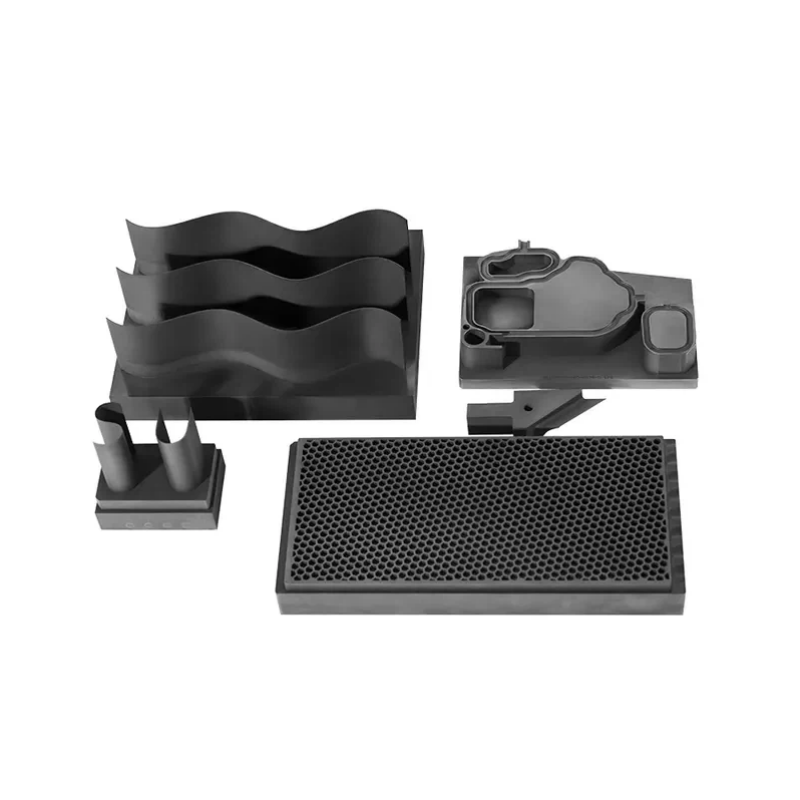
Machined graphite parts possess several unique properties that make them highly suitable for advanced manufacturing applications. Some of the most notable properties include:
One of the most valuable properties of machined graphite is its excellent electrical conductivity. Graphite is widely used in electrical applications, such as electrodes in electric arc furnaces and semiconductor manufacturing, due to its ability to efficiently conduct electricity. It also has superior thermal performance, which allows it to withstand high temperatures without degrading, making it a critical material in heat-sensitive applications.
Graphite's chemical resistance makes it an ideal material for use in aggressive environments, where other materials may corrode or degrade. Its inert nature allows it to resist damage from harsh chemicals, acids, and solvents, providing a durable solution for industries such as chemical processing and aerospace.
Machined graphite parts are known for their high precision and excellent surface finishes. Due to the intricate nature of CNC machining, graphite can be cut and shaped to achieve very tight tolerances, ensuring the highest levels of accuracy in the final product. This level of precision is essential in industries like semiconductor manufacturing, where components must meet strict dimensional requirements.
Graphite also exhibits self-lubricating behavior, making it ideal for applications that involve high friction or require moving parts. In industries like automotive and aerospace, where components must withstand friction without the need for additional lubricants, machined graphite parts provide a reliable solution.
Machined graphite parts are used in a wide range of industries due to their exceptional properties. Some of the major industrial applications include:
Graphite's excellent electrical conductivity and thermal properties make it a key material in the electronics industry. It is used in components such as heat sinks, semiconductors, and electrical contacts, where performance under high heat and electrical stress is crucial.
In thermal management, graphite parts are often used in heat exchangers and other components that must efficiently dissipate heat. The material’s ability to handle high temperatures without degrading ensures reliable performance in critical applications.
Machined graphite parts are also employed in the aerospace and automotive industries, where they are used in components like bearings, seals, and gaskets. Their high-temperature resistance, lightweight nature, and low friction make them ideal for these demanding environments.
Graphite electrodes are extensively used in Electric Discharge Machining (EDM) processes. The material’s ability to withstand high temperatures and conduct electricity makes it the perfect choice for manufacturing components that require precision machining with minimal wear.
When choosing materials for advanced manufacturing projects, it is essential to consider both the cost and performance of the materials. Compared to traditional metals, graphite offers superior thermal stability, electrical conductivity, and resistance to wear, making it an ideal choice for demanding applications. Additionally, the extended service life of machined graphite parts ensures lower maintenance costs over time.
Customized machining services can enhance the reliability and performance of graphite parts, tailoring the materials to meet the specific needs of the project. By selecting high-quality machined graphite parts, companies can ensure that their products perform at the highest level of efficiency and durability.
Machined graphite parts offer a unique combination of properties that make them indispensable in advanced manufacturing. From electrical conductivity to high-temperature resistance, graphite provides an exceptional material solution for industries that demand precision and durability. By understanding the manufacturing process and the benefits of machined graphite, businesses can unlock new opportunities for innovation and performance in their projects.
For more information or to discuss your specific needs, contact us today. At SIAMC Advanced Materials Co., Ltd., we specialize in delivering high-quality machined graphite parts tailored to your project’s requirements.
1. What are the primary applications of machined graphite parts?
Machined graphite parts are widely used in electronics, aerospace, automotive, and semiconductor industries due to their excellent electrical conductivity, high-temperature resistance, and low friction properties.
2. How are machined graphite parts made?
They are made using precision CNC machining, where CAD and CAM programs guide the process to shape and cut the graphite into the desired form.
3. Why is graphite preferred over metals in high-temperature applications?
Graphite maintains its structure and performance under high temperatures, unlike metals that can expand, degrade, or melt under similar conditions.
4. How do machined graphite parts reduce maintenance costs?
The high durability and self-lubricating properties of machined graphite parts lead to fewer failures and longer service lives, ultimately reducing the need for frequent repairs or replacements.


