
- Home
- Products
- Solutions
- About
- Service
- Sustainability
- News
- Contact Us

Views: 0 Author: Site Editor Publish Time: 2026-01-27 Origin: Site


Can one bond control both heat and power flow? Conductive graphite glue helps carbon systems stay stable, efficient, and reliable.With SIAMC products, you will learn how the right adhesive improves thermal and electrical performance. Learn more about our products.
Conductive graphite glue is a carbon-based adhesive filled with fine graphite particles. These particles sit inside a binder matrix. After curing, they touch and overlap, forming continuous conductive paths across the bond line. These paths allow both electrons and heat to move between bonded surfaces. This turns the adhesive layer into a functional interface rather than just a mechanical joint.
Electrical performance depends on how well the graphite particles connect inside the adhesive layer. A dense and even network lowers resistance and supports stable current flow. In grounding systems, heating elements, and EMI control components, this property helps maintain consistent electrical behavior over long operating periods.
Graphite offers strong in-plane thermal conductivity. When flakes align within the adhesive layer, they help spread heat laterally across the bonded surface. This reduces localized hot spots and supports even temperature distribution, which protects sensitive parts and improves system stability.
The ratio of graphite filler to binder plays a major role in performance. Too little filler creates gaps that interrupt current and heat flow. Too much filler makes the paste difficult to apply and can weaken mechanical strength. A balanced formulation forms a stable, connected network that supports both conductivity and adhesion.
Graphite conducts more efficiently along flat planes than through thickness. During application, flakes often align parallel to the surface. This natural alignment improves lateral heat spreading, which helps manage surface temperature in bonded assemblies such as heat sinks or furnace fixtures.
Carbon-based adhesive formulas resist breakdown at high temperatures and remain stable in inert or reactive atmospheres. This makes them suitable for harsh environments such as vacuum furnaces, casting lines, and high-power electronic systems.
Performance Factor | Low Filler Adhesive | Balanced Graphite Glue | Overfilled Paste |
Electrical Resistance | High | Low | Medium |
Thermal Spreading | Weak | Strong | Medium |
Application Ease | Easy | Moderate | Difficult |
Long-Term Stability | Low | High | Medium |
Graphite glue performs well when bonding graphite to carbon or carbon composite materials. Similar thermal expansion rates reduce internal stress during heating and cooling cycles. This helps maintain joint strength and reduces the risk of cracking or delamination.
When bonding carbon to ceramics or metals, differences in thermal expansion can place stress on the adhesive layer. A flexible graphite-based bond line can absorb some of this movement. Careful surface preparation becomes essential to maintain both mechanical and conductive performance.
Clean surfaces improve adhesion and conductivity. Dust, oil, and oxidation create barriers that reduce contact quality. Light roughening increases surface area and helps the adhesive spread evenly, reducing voids that interrupt conductive paths.
Some graphite glues arrive as powders that require mixing with a liquid binder. The mixing ratio controls flow, adhesion strength, and conductive performance. A smooth, uniform paste helps reduce air pockets and improves both thermal and electrical continuity across the joint.
Small joints often benefit from syringes or fine brushes. Larger surfaces use spatulas or rollers. The goal is to apply a thin, even layer that fully covers the contact area without trapping air or creating thick spots.
Certain formulations cure at room temperature, while others gain strength during a controlled heating cycle. Slow temperature ramping during first use helps stabilize the adhesive layer and align graphite particles for better conductivity.
In furnace systems, conductive graphite glue bonds fixtures, liners, and heating supports. The adhesive must handle extreme temperatures while maintaining both electrical and thermal pathways. This supports even heating and stable power delivery inside the hot zone.
Graphite glue connects heat sinks, conductive housings, and grounding paths in electronic devices. It helps move heat away from chips and power modules, reducing thermal stress and improving device lifespan.
Casting operations often use graphite molds and inserts. The adhesive layer must survive rapid heating and cooling. High thermal cycling resistance helps maintain mold shape and reduces scrap rates.
Thermal epoxies can move heat effectively but usually act as electrical insulators. Graphite glue supports both heat transfer and current flow, making it more suitable for combined thermal and electrical applications.
Ceramic cements tolerate high heat but tend to become brittle. Silicone adhesives remain flexible but often lose strength at elevated temperatures. Graphite glue balances strength, heat resistance, and conductivity.
Graphite glue often costs more per unit than basic adhesives. However, longer service life, fewer failures, and improved energy efficiency can reduce total lifecycle cost.
Adhesive Type | Electrical Conductivity | Heat Resistance | Flexibility | Typical Use Case |
Conductive Graphite Glue | High | Very High | Medium | Furnaces, EMI, heat paths |
Thermal Epoxy | Low to Medium | Medium | Low | Heat sinks only |
Ceramic Cement | Low | High | Low | Structural seals |
Silicone Adhesive | Low | Medium | High | Flexible joints |
Carbon-based adhesives release minimal vapors during heating, which supports clean operation in vacuum systems and sensitive electronic assembly environments. This low outgassing behavior helps protect components from surface contamination and reduces the risk of defects in high-precision manufacturing. Over time, cleaner processes also contribute to more stable product quality and fewer rejected parts.
Powder and paste forms should be handled with gloves and eye protection to prevent skin and eye irritation. Fine particles should not be inhaled, so proper ventilation or dust control is recommended during mixing and application. Dry, sealed storage helps preserve product performance over time by preventing moisture absorption that could affect bonding consistency and curing behavior.
Once cured, graphite glue is often inert and resistant to moisture and many chemicals. This stability makes it suitable for long-term use in harsh industrial environments. Disposal usually follows standard industrial waste guidelines, and cured material typically poses fewer environmental risks than many chemical-based adhesives.
Resistance meters and thermal flow tests help verify that bonded joints meet design targets for both current flow and heat transfer. These tests confirm consistent performance across production batches and help identify variations caused by mixing ratios or application thickness.
Shear and peel tests measure joint strength under load. Thermal cycling checks for cracks or delamination after repeated heating and cooling cycles. Together, these methods simulate real operating conditions and help predict long-term reliability before full deployment.
Visual inspection and imaging tools help detect voids, cracks, or uneven bonding. Early detection allows corrective action before small defects lead to larger system failures or unplanned downtime.
Each system has unique temperature ranges, atmospheres, and electrical demands. Selecting a glue rated for these conditions helps ensure long-term stability and prevents premature bond degradation under stress.
Clear data sheets and sample testing help confirm conductivity, strength, and curing behavior before full-scale use. Reliable documentation also supports better process control and easier troubleshooting when performance issues arise.
Consistent formulations and repeatable mixing steps support stable performance as production volume increases. Standardized procedures help maintain quality across batches and reduce variability in large-scale operations.
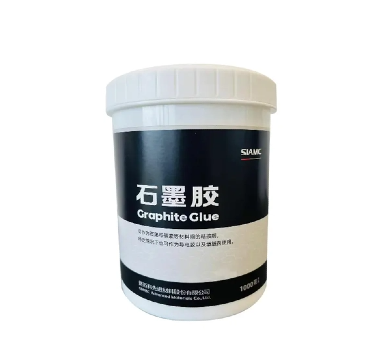
Many operators now seek graphite glue that matches the purity and performance of their carbon components. Providers such as SIAMC offer graphite glue products designed to align closely with high-grade graphite and carbon materials. This compatibility can improve bonding stability, reduce thermal stress, and extend the service life of components used in furnaces, casting systems, and electronic assemblies.
Conductive graphite glue supports heat transfer, stable current flow, and strong system reliability. By choosing the right adhesive, industries improve performance, reduce downtime, and extend component life. With SIAMC products, users gain graphite glue solutions that enhance bonding quality, energy efficiency, and long-term value in demanding carbon component applications.
A: Conductive graphite glue creates strong joints that carry heat and electricity in carbon component bonding systems.
A: It forms conductive paths that spread heat, reducing hot spots and improving thermal management adhesive efficiency.
A: Graphite glue supports electrical graphite bonding, while most epoxies block current flow.
A: It enables fast repairs and stable bonds that last through thermal cycling.


