
- Home
- Products
- Solutions
- About
- Service
- Sustainability
- News
- Contact Us

Views: 0 Author: Site Editor Publish Time: 2026-07-01 Origin: Site


Advanced manufacturing sets an unforgiving stage. Even microscopic impurities in raw materials trigger compounding macro-level failures. Industries like semiconductors, energy storage, nuclear, and aerospace demand absolute perfection from their supply chains. You cannot rely on basic carbon materials when engineering next-generation technologies. Engineers must rigorously evaluate raw materials to prevent catastrophic system breakdowns.
Choosing the wrong graphite specification easily compromises thermal stability. It also degrades electrical conductivity in extreme environments. This guide moves beyond baseline metrics to dissect how you should evaluate High Purity Graphite Powder for critical applications. We will explore how chemical purity, physical morphology, batch consistency, and supplier viability drive successful sourcing. You will learn actionable strategies to align powder specifications directly with your exact manufacturing requirements.
"High purity" is application-dependent but generally requires >99.99% to 99.9999% carbon content by weight (wt%), with specific impurity tolerances measured in parts per million (ppm).
Equivalent Boron Content (EBC) and trace transition metal levels are critical limiting factors for semiconductor and nuclear applications.
Particle Size Distribution (PSD) and morphology directly dictate electrical conductivity and packing density in the final manufactured component.
A reliable procurement framework requires validating supplier Certificates of Analysis (COA) through independent Glow Discharge Mass Spectrometry (GDMS) or ICP-OES testing.
Manufacturers often use the term "high purity" loosely. We must define strict boundaries. The baseline standard separates commercial-grade materials from specialized powders. Commercial graphite usually ranges from 90% to 99% carbon content. This grade works well for brake pads or basic lubricants. True high purity graphite powder starts strictly at 99.99% by weight. Many advanced sectors demand 99.999% or even 99.9999% purity levels.
An overall 99.99% purity rating is insufficient for critical manufacturing. It leaves 100 parts per million (ppm) of unknown contaminants. You need a detailed elemental breakdown. Ten ppm of harmless silica acts very differently than ten ppm of iron. Blanket percentages mask these dangerous variations. Engineers must evaluate exact impurity profiles to ensure safe material integration.
Advanced applications closely monitor Equivalent Boron Content. EBC measures the neutron-absorbing capacity of all trace impurities. It normalizes these impurities against the neutron capture cross-section of boron. Nuclear and semiconductor industries often require an EBC below 5 ppm. Some ultra-precise applications demand levels below 2.03 ppm. High EBC ruins neutron moderation in nuclear reactors. It also distorts electrical properties in semiconductor crystal growth. You must track EBC rigorously.
Poor material selection carries a heavy cost. Trace impurities vaporize at high temperatures. This causes severe thermal instability. Conductive metallic impurities create electrical shorts in sensitive electronic matrices. Structural degradation occurs rapidly under extreme mechanical stress. Using unverified graphite powder jeopardizes entire production runs. It causes unpredictable failure rates in the field.
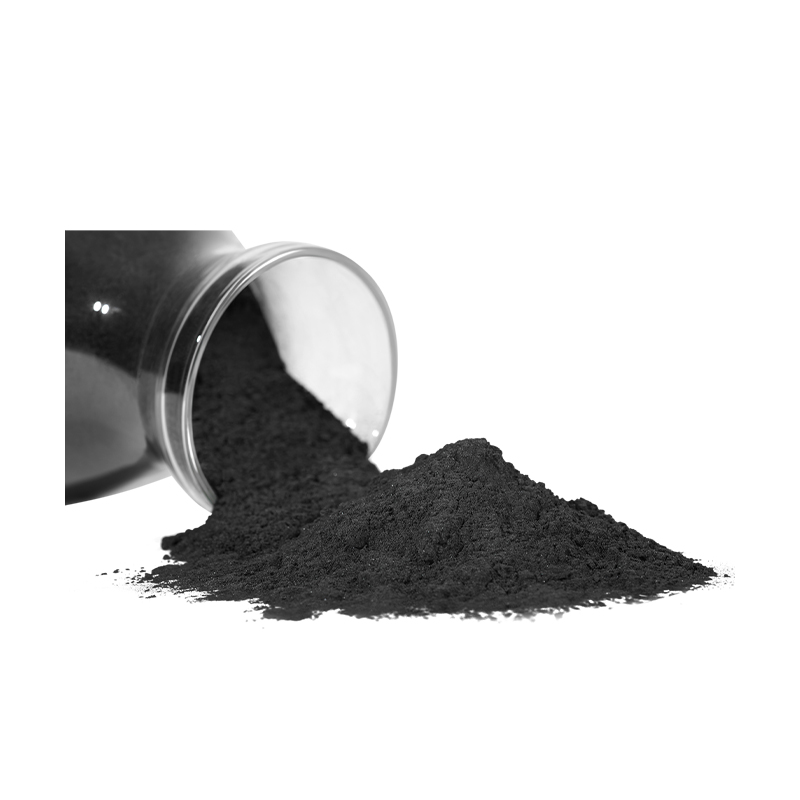
Evaluating high purity powder requires a multi-dimensional approach. You cannot look at purity alone. Physical characteristics dictate how the material behaves during processing. We must examine chemical constraints, morphology, and particle size.
Transition metals cause massive problems in battery technologies. Iron (Fe), vanadium (V), and nickel (Ni) trigger parasitic side reactions. These reactions degrade lithium-ion cells and cause rapid self-discharge. You must assess transition metal levels down to single-digit ppm. Additionally, evaluate ash content levels and volatile matter thresholds. High volatile matter causes dangerous outgassing during high-temperature sintering.
Morphology describes the physical shape of the graphite particles. The shape impacts isotropic properties. It determines how the powder flows and compacts. The degree of graphitization dictates thermal and electrical conductivity. Higher graphitization yields superior conductivity.
Morphology Type | Structural Characteristics | Primary Application Strengths |
|---|---|---|
Spherical | Rounded edges, low surface area | High packing density, lithium-ion battery anodes |
Flake | Flat, layered structure, highly anisotropic | Thermal management, extreme conductivity |
Synthetic | Engineered shapes, highly consistent | Semiconductors, nuclear moderators, aerospace |
Particle Size Distribution controls how graphite behaves in slurries and molds. We examine D10, D50, and D90 metrics. D50 represents the median particle size. D10 and D90 indicate the spread of the distribution. Tight PSD control ensures predictable packing density. It improves particle dispersion in liquid slurries. Precise PSD also guarantees a flawless final surface finish in machined or molded parts. Wide size variations lead to structural weak points.
Purity and morphology dictate electrical and thermal enhancements. Removing trace impurities eliminates electron scattering. High crystallinity creates uninterrupted pathways for thermal transfer. Integrating premium High Purity Graphite Powder ensures optimal matrix conductivity. You must match the powder's inherent conductivity metrics to your composite requirements.
Different industries prioritize entirely different material metrics. A specification perfect for batteries might fail in aerospace. You must align the powder specifications directly to your unique use case.
Semiconductor manufacturing demands ultra-low EBC. Silicon crystal pulling occurs at extreme temperatures. The process requires exceptional thermal shock resistance. Graphite components must not crack under rapid cooling. Furthermore, the absence of off-gassing contaminants is critical. Vaporized impurities easily ruin a multi-million dollar silicon ingot.
Battery engineers prioritize physical packing and chemical stability. Tap density is crucial for maximizing energy storage per cubic centimeter. Specific surface area (BET) dictates how the electrolyte interacts with the anode. High BET can lead to excessive solid electrolyte interphase (SEI) formation. Low iron and moisture content remain absolute necessities. Moisture reacts with electrolytes to form dangerous acids. Iron causes internal micro-shorts.
Aerospace applications focus on survivability. Components face extreme mechanical stress and atmospheric reentry heat. Evaluate oxidation resistance at high temperatures. The powder must provide exceptional lubricity under severe friction. Standard graphite burns away too quickly. Ultra-high purity synthetic variants resist oxidation much longer.
Guide your purchasing decisions by identifying your primary failure risk. The chart below maps common failure modes to the required powder specifications. This helps buyers isolate exactly what they need to measure.
Primary Failure Risk | Target Powder Specification to Mitigate Risk |
|---|---|
Thermal Degradation / Cracking | High degree of graphitization, optimized PSD |
Electrical Shorts in Batteries | Fe, Ni, V impurities strictly < 5 ppm |
Neutron Absorption (Nuclear) | Ultra-low EBC < 2.03 ppm |
Poor Matrix Packing Density | Spherical morphology, tight D10-D90 spread |
Scaling up introduces hidden dangers. A material performing perfectly in the lab often fails on the production floor. You must anticipate and control these implementation risks.
Consistency is the primary hidden risk in advanced manufacturing. A single passing sample does not guarantee production-scale viability. Suppliers might cherry-pick pilot samples. Production volumes can show wild variations in PSD or trace elements. You must establish strict statistical process control (SPC) limits. Demand run-charts from your supplier covering multiple production batches.
Ultra-high purity graphite powder acts like a sponge for airborne contaminants. You must address the operational realities of storing and mixing the powder. Standard factory environments ruin pristine graphite.
Cleanroom Storage: Store all powder in climate-controlled environments to prevent moisture absorption.
Dedicated Tooling: Use dedicated transfer pipes and mixing vessels. Shared equipment introduces cross-contamination from other metals.
Inert Atmospheres: Transfer powders under argon or nitrogen blankets to prevent oxidation and moisture ingress.
Dust Mitigation: Implement strong exhaust systems. Airborne graphite dust causes respiratory hazards and shorts out facility electronics.
Varying powder specifications alter downstream processing. Changes in specific surface area (BET) drastically change binder compatibility. You may need to adjust your slurry viscosity profiles. Different purity levels alter necessary sintering temperatures. Furthermore, highly crystalline graphite powder is highly abrasive. It accelerates tool wear during molding or extrusion processes. Plan for increased tooling replacement cycles.
Selecting a supplier requires rigorous vetting. You cannot rely on marketing claims. A structured verification framework separates reliable partners from risky vendors.
Understand how the supplier achieves their purity levels. Differentiate between suppliers who merely mill natural flake graphite and those using advanced purification. High-temperature thermal purification (above 2500°C) volatilizes many impurities. Halogen purification uses chlorine or fluorine gases to strip away stubborn metals. Suppliers utilizing advanced halogen purification offer much higher consistency for semiconductor applications.
Mandate transparent testing methodologies. In-house supplier Certificates of Analysis (COA) are insufficient for advanced manufacturing. Require third-party validation data. You need testing via Glow Discharge Mass Spectrometry (GDMS) or Inductively Coupled Plasma Optical Emission Spectroscopy (ICP-OES). These techniques detect impurities down to parts per billion (ppb). Independent testing keeps suppliers honest and protects your production line.
Evaluate the raw material source. Synthetic graphite relies on petroleum coke precursors. Natural flake graphite relies on mining operations. Both have distinct supply chain vulnerabilities. Geopolitical risks strongly affect natural graphite availability. Export restrictions can abruptly halt your production. Diversify your sourcing and assess the geopolitical stability of your supplier's raw material origins.
Do not jump straight into volume procurement. Recommend a structured pilot program to mitigate risk. Follow this exact sequence:
Small-batch lab test: Verify GDMS data and basic physical properties.
Prototype run: Produce a small batch of final components to test process compatibility.
Statistical variance analysis: Test three separate batches to prove supplier consistency.
Volume procurement: Lock in pricing and finalize delivery schedules based on verified specs.
Evaluating high purity graphite powder is a strict exercise in risk mitigation. It requires precise material matching. Sourcing is never just about finding the lowest price per kilogram. A minor impurity spike easily destroys expensive advanced components.
Engineers and procurement teams must finalize their specific ppm tolerances before soliciting bids. Knowing your exact requirements maintains leverage. It provides clarity during supplier negotiations. Prioritize independent GDMS validation, demand batch-to-batch consistency, and align morphology perfectly with your final application. Taking these steps guarantees a resilient, high-performance manufacturing pipeline.
A: The difference represents an exponential decrease in trace elements. A 99.9% purity leaves 1,000 ppm of contaminants, which is acceptable for standard industrial use. A 99.999% purity leaves only 10 ppm. Achieving 99.999% requires advanced high-temperature thermal or halogen gas purification to vaporize stubborn metals. This ultra-pure grade is mandatory for sensitive semiconductor and aerospace components.
A: EBC measures the collective neutron-absorbing capacity of all trace impurities within the graphite. Boron is a powerful neutron absorber. In nuclear reactors, high EBC ruins neutron moderation. In semiconductor electronics, it disrupts electrical pathways and crystal growth. Therefore, critical applications strictly require EBC levels below 5 ppm, and sometimes below 2.03 ppm.
A: Purity is verified using advanced analytical techniques rather than basic combustion tests. Glow Discharge Mass Spectrometry (GDMS) and Inductively Coupled Plasma Optical Emission Spectroscopy (ICP-OES) are the industry standards. These methods identify and quantify trace metals down to parts per billion. Basic ash content testing is also used to measure overall non-combustible residue.
A: Yes, particle size directly impacts conductivity. The Particle Size Distribution (PSD) determines packing density. Tighter, optimized particle sizes minimize voids and increase the physical contact area between particles. This continuous contact creates superior pathways for both thermal and electrical energy transfer throughout the final manufactured composite.


