
- Home
- Products
- Solutions
- About
- Service
- Sustainability
- News
- Contact Us

Views: 0 Author: Site Editor Publish Time: 2026-07-08 Origin: Site


Engineers and procurement professionals constantly seek reliable components for extreme thermal environments. Industries like semiconductor manufacturing, metallurgy, and aerospace push materials to their absolute limits every single day. In these intense settings, you cannot compromise on material integrity. High-temperature applications leave zero room for structural failure, outgassing, or dimensional instability. This harsh reality makes the precision of Machined Graphite Parts a critical point of failure or success. A single microscopic flaw can halt entire production lines and waste valuable resources. You need components built to exact specifications to ensure seamless operations. This article provides a comprehensive technical and operational framework. We will help you evaluate custom graphite machining capabilities and mitigate inherent production risks. You will also learn exactly how to select a reliable manufacturing partner. Read on to master the complexities of high-temperature graphite component integration.
Material Selection Dictates Machinability: Achieving tight tolerances relies heavily on selecting the correct graphite grade (e.g., isostatic vs. extruded) and grain size for the specific thermal environment.
Tooling and Dust Control are Critical: Graphite's highly abrasive nature and conductive dust require specialized CNC environments; suppliers lacking dedicated setups risk cross-contamination and poor surface finishes.
Handling Risks Rival Manufacturing Risks: Brittleness and edge chipping during post-machining handling and transit require specialized quality control and packaging protocols.
Supplier Evaluation Requires Proof: Shortlisting should rely on verifiable tolerance capabilities, surface finish data, and proven defect-mitigation strategies, not just cost.
Engineers establish strict baseline expectations for extreme heat environments. Components must survive conditions where traditional metals simply melt or warp. You expect machined graphite parts to maintain total structural integrity. They must resist severe thermal shock at temperatures exceeding 2,500°C. Graphite uniquely gains strength as it heats up. This property makes it invaluable for high-temperature vacuum furnaces. However, poor machining can introduce micro-fractures. These invisible defects become catastrophic failure points under intense thermal stress. You must ensure the manufacturer understands these severe operational demands.
Ambient-temperature measurements do not tell the whole story. You must account for the Coefficient of Thermal Expansion (CTE). Graphite expands predictably as temperatures rise. However, this expansion impacts tightly designed tolerances. A part measuring perfectly in a climate-controlled inspection room might bind or loosen during operation. You need to calculate exact dimensional shifts before machining begins. Engineers must collaborate closely with suppliers to design these offsets. This proactive strategy ensures parts perform flawlessly at maximum operating temperatures.
Contamination ruins batches in semiconductor and vacuum applications. High temperatures often force impurities out of porous materials. This process, known as outgassing, destroys sensitive environments. You must demand high-purity graphite to prevent these disasters. Ash content should typically stay below 5 ppm for critical applications. Setting this clear performance metric simplifies your vendor evaluation process. You establish a non-negotiable standard for material quality. Clean materials ensure clean processes and reliable end products.
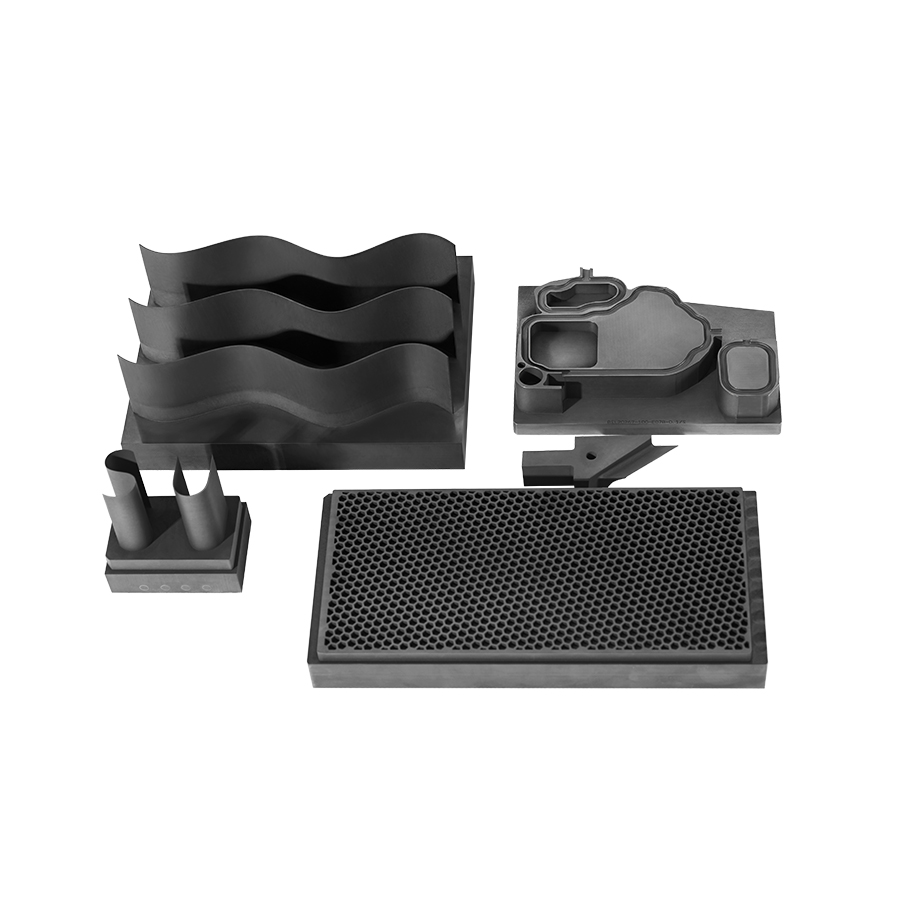
Grain size directly dictates achievable feature resolution. You can generally categorize graphite into ultra-fine, fine, and medium grain structures. Medium grains work well for bulky, structural components. They offer good thermal resistance but struggle holding fine details. Fine grains allow for smoother finishes and tighter tolerances. However, micro-machining requires ultra-fine isostatic graphite. You need ultra-fine grains to retain sharp edges and delicate geometries. Large grains simply break away when cut too thin. Selecting the right grain size prevents costly edge breakout during production.
Manufacturing methods drastically change graphite's internal structure. Extruded graphite forces the material through a die. This creates directional limitations and varying strengths along different axes. It works well for simple, large-scale items like heating elements. Isostatic graphite undergoes uniform pressure during formation. This process yields isotropic properties. You get consistent strength and electrical resistance in all directions. Precision Machined Graphite Parts often demand isostatic grades. The uniformity guarantees predictable machining and highly stable operational performance.
Material costs vary significantly between grades. Ultra-fine isostatic graphite commands a premium over standard extruded options. You need a rational framework for this investment. Balance the initial material cost against the required operational lifespan. Assess the precision demands of your final component carefully. Over-specifying a grade wastes budget on unnecessary capabilities. Under-specifying leads to premature part failure and expensive downtime. Consult specialists to find the exact middle ground for your project.
Graphite Grade Category | Typical Grain Size | Primary Benefit | Best Application Fit |
|---|---|---|---|
Medium Grain | 0.8mm - 3.0mm | High thermal shock resistance | Furnace structural supports |
Fine Grain | 0.04mm - 0.8mm | Good balance of cost and finish | Standard heating elements |
Ultra-Fine Isostatic | < 0.04mm | Superior detail and isotropic strength | Semiconductor tooling |
Graphite behaves like an abrasive block during machining. It rapidly degrades standard steel and carbide tooling. Tool wear directly compromises dimensional accuracy across large production runs. A qualified supplier avoids standard tooling entirely. They must utilize specialized diamond-coated end mills and drills. Diamond coating extends tool life significantly. Operators must also optimize feeds and speeds continuously. Cutting too fast generates excessive heat and tool friction. Cutting too slow causes rubbing instead of shearing. You should audit a vendor's tooling replacement protocols to guarantee consistent part sizes.
Machining graphite produces no chips, only fine dust. This dust poses severe risks to unprotected CNC electronics. Graphite conducts electricity extremely well. Dust settling on circuit boards causes immediate short circuits. It also damages machine ways and ball screws. You must look for suppliers operating dedicated graphite-only machining centers. They need high-velocity vacuum systems integrated directly into the spindle. Wet machining is sometimes used, but it requires extensive drying protocols. A clean shop floor usually indicates proper dust mitigation procedures.
You must set realistic expectations for graphite components. Standard achievable tolerances typically hover around +/- 0.0005 inches. Highly specialized setups can push this slightly further. However, the material's inherent porosity limits surface finishes. You cannot achieve the mirror-like smoothness common on polished metals. Porous materials always exhibit a matte, slightly textured surface at the microscopic level. Discuss surface finish requirements openly with your manufacturer. They can recommend specific ultra-fine grades if you require exceptionally smooth surfaces.
Brittleness is the defining challenge of graphite processing. Edge chipping remains the most common failure mode in custom jobs. Machinists must employ specific strategies to prevent breakout on delicate features. Climb milling is often preferred over conventional milling. It reduces the cutting pressure exerted on thin walls. Tool path optimization also plays a critical role. Ramping into cuts prevents sudden impact shocks. You should ask potential partners about their specific programming habits. Proper techniques preserve intricate geometries and prevent costly scrap rates.
Complex geometries require rigorous metrology. Traditional calipers often crush delicate graphite edges. You need non-contact measurement tools to verify dimensions safely. Optical comparators and laser scanners provide excellent results. For three-dimensional verification, you should demand Coordinate Measuring Machine (CMM) reports. CMMs utilize highly sensitive touch probes or vision systems. They map the physical part against the original CAD model accurately. This framework ensures every dimension meets your strict requirements. Rigorous inspection stops out-of-tolerance parts from reaching your assembly line.
A perfectly machined part becomes useless if it chips in transit. Handling risks frequently rival actual manufacturing risks. Transporting brittle graphite demands extreme care. You must demand specialized packaging solutions for complex geometries. Standard bubble wrap often fails during rough handling.
Require custom-cut foam inserts contoured exactly to the part geometry.
Mandate suspension packaging for highly fragile, thin-walled components.
Use vacuum-sealed bags to prevent moisture absorption during shipping.
Apply clear exterior labeling warning carriers of extreme fragility.
Ask your supplier to detail their shipping procedures before signing any long-term contract.
General machine shops struggle with graphite. They often lack specialized tooling inventory and proper ventilation. Cross-contamination between metal chips and graphite dust ruins both processes. Specialized graphite facilities outperform generalist shops significantly. They invest heavily in contamination control. Their operators understand the unique quirks of brittle materials. You benefit from their focused expertise and purpose-built infrastructure. Always prioritize facilities dedicating significant floor space exclusively to carbon-based materials.
A vendor might prototype custom graphite molds perfectly. However, full-scale production introduces entirely new variables. You must assess their ability to scale up seamlessly. Do they possess enough dedicated CNC machines to meet your volume? Can they automate part loading for long, unattended runs? Repeatable production requires robust standard operating procedures. A slight deviation in tool wear tracking can ruin hundreds of parts. Ensure their production capacity aligns comfortably with your long-term demand forecasts.
Traceability is non-negotiable for extreme environments. You need a paper trail backing every component. Ensure the supplier provides comprehensive material certificates. These documents verify the purity and grade of the raw graphite blank. You also need detailed inspection reports covering critical dimensions. This documentation guarantees consistency across multiple batches over several years. High-quality vendors readily supply these records without hesitation.
You can follow a clear path to secure a reliable vendor. Take these actionable steps to evaluate potential partners effectively:
Request initial sample runs to evaluate surface finish and edge retention physically.
Review their material specification sheets to confirm CTE and purity metrics.
Audit the supplier's quality management system, checking for standard certifications like ISO 9001.
Submit a complex engineering drawing to test their manufacturability review process.
These steps strip away marketing claims and reveal actual manufacturing competence.
Material selection heavily dictates your ultimate operational success. You must pair the right graphite grade with specialized machining processes. High-temperature environments expose every microscopic flaw mercilessly. Reliable components require ultra-fine grains, precise diamond tooling, and rigorous inspection protocols. Sourcing Machined Graphite Parts demands a focus on total lifecycle reliability. Do not simply hunt for the lowest initial quote. Cheap parts inevitably lead to expensive system failures down the line. Focus instead on verifiable expertise and stringent quality control frameworks. Encourage your engineering teams to engage suppliers early in the design phase. Submit your engineering drawings today for a comprehensive manufacturability review. Contact technical sales experts to receive precise material grade recommendations tailored to your unique thermal challenges.
A: Standard lead times usually range from 2 to 6 weeks. Material availability heavily dictates this timeline. Specialized ultra-fine isostatic grades may take longer to source. The complexity of your part geometry also affects programming and machining durations. Expedited services often exist for critical replacements.
A: Dedicated graphite machining centers can achieve remarkably tight tolerances. You will typically see ranges from ±0.001 inches down to ±0.0005 inches. The exact limit depends entirely on the specific graphite grade used and the complexity of the part geometry. Highly porous grades cannot hold these micro-tolerances.
A: Graphite is highly abrasive and destroys standard steel tooling rapidly. Furthermore, machining it creates conductive dust instead of chips. This dust causes severe short circuits in unprotected CNC electronics. Proper graphite machining requires dedicated extraction systems and specialized diamond-coated tooling that general shops rarely possess.
A: You must match the grain size and purity level to your operating temperature. Consider the atmospheric conditions of your furnace and the required detail resolution. Medium grains suit structural supports, while ultra-fine grains hold sharp edges for complex molds. Always consult with your manufacturer for final recommendations.


