
- Home
- Products
- Solutions
- About
- Service
- Sustainability
- News
- Contact Us

Views: 0 Author: Site Editor Publish Time: 2026-07-04 Origin: Site


Device miniaturization and higher power densities have pushed traditional thermal interface materials (TIMs) to their physical limits. Modern hardware generates intense thermal loads inside increasingly cramped internal architectures. Engineers and product designers face a hard ceiling today. They constantly struggle to balance weight, thickness, and heat dissipation using conventional options like copper, aluminum, or standard silicone pads. You cannot simply add bulkier metal heat sinks to sleek electronics anymore without ruining the product design.
High Purity Graphite Paper solves these complex thermal bottlenecks through advanced material science. It delivers anisotropic heat transfer, superior weight-to-performance ratios, and long-term chemical stability. In this article, you will learn how this specialized material fundamentally outperforms legacy metals. We will explore its core mechanisms, examine real-world application frameworks, and outline the critical design considerations needed for successful implementation.
Anisotropic Heat Transfer: Spreads heat laterally (in-plane) up to 4x faster than copper while maintaining a lightweight profile.
Operational Reliability: Functions without degradation across extreme temperature ranges (-200°C to +3000°C in inert environments).
Weight & Space Optimization: Replaces bulky metal heat sinks, ideal for EV battery packs, aerospace, and ultra-thin electronics.
Procurement Mandate: Specifying "high purity" (>99% carbon content) prevents outgassing and material degradation in sensitive applications.
Product engineers face immense pressure to dissipate heat from high-performance components. Traditional materials often fail to meet the rigorous demands of modern hardware design. We must examine why legacy solutions fall short in contemporary applications.
The Problem with Legacy Metals
Copper and aluminum boast excellent thermal properties. However, they add unacceptable weight and volume to modern electronics. They consume too much physical space inside compact product architectures. When designing a lightweight laptop or a tightly packed electric vehicle battery, every gram matters. Heavy metals force designers to compromise on portability and ergonomic appeal.
The Limitations of Silicone Pads
Standard silicone-based thermal pads are common. Yet, they present severe long-term risks. They show high vulnerability to thermal degradation over repeated heating and cooling cycles. You will often encounter "pump-out" effects. This happens when the silicone material physically migrates away from the heat source due to thermal expansion. Furthermore, silicone pads cause outgassing. They release volatile compounds over time. This outgassing severely risks sensitive optical lenses or nearby electronic components.
The Necessity of High Purity
You might wonder why standard industrial-grade graphite is insufficient. Standard graphite fails completely in high-end electronic and aerospace environments. Lower-grade options contain impurities like sulfur or trace metals. These impurities cause highly inconsistent thermal resistance across the material. Worse, they trigger micro-corrosion when exposed to moisture or electrical currents. You must specify high purity variants to ensure structural integrity.
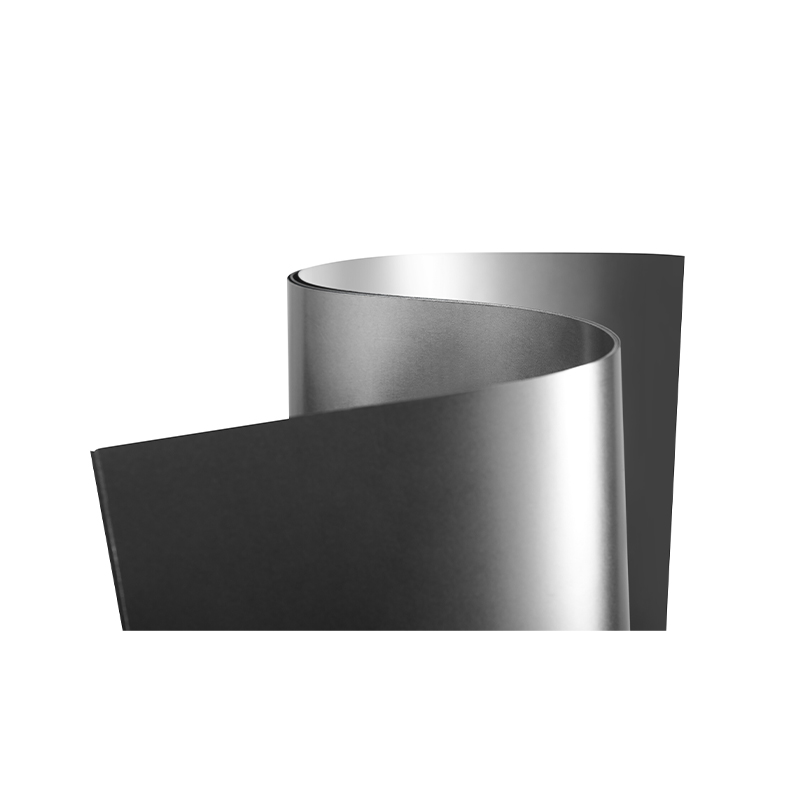
To leverage this material effectively, engineers must understand its underlying physics. It does not behave like a standard isotropic metal. Instead, it relies on unique structural properties to manage heat flows.
Anisotropic materials transfer heat differently depending on the direction of the flow. High Purity Graphite Paper excels in this area. It enables rapid lateral heat spreading along the X-Y axis. In-plane thermal conductivity can reach staggering levels up to 1500 W/m·K. This rapid spreading quickly eliminates concentrated hot spots from microprocessors. Simultaneously, it provides controlled thermal insulation along the Z-axis. This directional behavior protects underlying or adjacent components from extreme heat damage.
Operational environments can be exceptionally harsh. Industrial systems frequently expose materials to corrosive chemicals and massive temperature swings. Graphite paper highlights incredible stability in these corrosive environments. It remains completely immune to thermal cycling fatigue. Unlike metals, it will not melt, warp, or experience structural shifting. It retains its physical properties intact even after thousands of extreme thermal shocks.
Air is a terrible conductor of heat. Microscopic air gaps between a processor and a heat sink destroy thermal performance. Graphite paper exhibits a highly flexible nature. It compresses under proper mounting pressure. This compression fills micro-voids between mating surfaces. By displacing trapped air, it significantly minimizes thermal contact resistance. This ensures a highly efficient thermal pathway.
Selecting the right thermal interface material requires objective comparisons. Engineers must weigh performance metrics against physical constraints to make informed design choices.
When you compare it to traditional metal foils, the weight savings become immediately apparent. Graphite paper is roughly 25-30% lighter than aluminum. It is an impressive 75-80% lighter than copper. Beyond weight reduction, it offers superior flexibility for complex geometries. You can bend it around tight corners where stiff metal foils would crease or snap.
Silicone pads bleed oil over time. This oil contaminates circuit boards. Graphite paper presents zero risk of silicone oil bleed or outgassing. It maintains an infinitely longer lifespan under continuous high-temperature stress. You install it once, and it performs consistently without drying out or breaking down.
We must acknowledge structural trade-offs to build reliable systems. Graphite is inherently electrically conductive. This characteristic presents a short-circuit risk in bare-die electronics. Engineers must specify dielectric coatings when using it near exposed traces. Adding a thin PET (polyethylene terephthalate) isolation layer solves this issue. It prevents electrical shorts while maintaining excellent thermal transfer properties.
Material Type | Thermal Conductivity (X-Y Axis) | Density / Weight Impact | Outgassing Risk | Electrical Conductivity |
|---|---|---|---|---|
Copper Foil | ~400 W/m·K | High (Heavy) | None | Conductive |
Silicone Pad | 1 - 15 W/m·K | Medium | High | Insulative |
Aluminum Foil | ~230 W/m·K | Medium | None | Conductive |
High Purity Graphite | Up to 1500 W/m·K | Very Low (Lightweight) | None | Conductive (Requires PET) |
Certain industries cannot afford thermal failures. They rely heavily on advanced heat spreading to maintain safety and performance. Let us examine where this material adoption proves most critical.
Consumer Electronics & 5G Hardware: Modern smartphones and high-performance laptops pack massive processing power into millimeters of space. 5G base stations handle massive data loads, generating intense localized heat. Graphite paper mitigates this heat efficiently. It cools these devices without adding unwanted bulk or weight.
EV Battery Thermal Management: Electric vehicle battery packs are incredibly sensitive to temperature variations. If one lithium-ion cell overheats, it can trigger catastrophic thermal runaway. Graphite sheets spread heat evenly across the entire battery module. This uniformity prevents localized overheating, ensuring passenger safety and extending overall cell life.
Industrial Sealing & Aerospace: Aerospace engineering demands materials that survive punishing environments. Graphite acts as both a high-temperature gasket and a heat-spreading layer here. Traditional elastomers melt, crack, or become brittle at high altitudes. Graphite maintains perfect seals and transfers heat reliably under extreme atmospheric pressure changes.
Transitioning to new thermal materials requires careful manufacturing adjustments. You cannot treat graphite paper exactly like a standard silicone pad. It presents unique handling and assembly challenges.
Raw graphite paper is quite delicate. It flakes and tears easily if handled poorly. This fragility creates bottlenecks during high-volume manufacturing assembly. We must outline specific mitigation strategies. You must utilize edge-sealing techniques. Applying lamination or specific backing materials protects the graphite core. These structural reinforcements allow automated robotic arms to place the pads without causing micro-tears.
Engineers face a frustrating reality regarding adhesives. Applying pressure-sensitive adhesives (PSAs) for mounting adds thermal resistance. The adhesive layer acts as a mild thermal insulator. You must balance ease-of-assembly with thermal performance. We recommend applying adhesives only to the edges of the sheet. Alternatively, use ultra-thin thermally conductive tapes. This framework minimizes the thermal penalty while keeping the material securely in place.
Optimal interfacial contact does not happen by accident. High Purity Graphite Paper relies heavily on applied pressure to fill microscopic air gaps. You must detail the necessity of mechanical fastening. Using screws, spring-loaded clips, or rigid backplates achieves the required clamping force. Insufficient mounting pressure leaves trapped air pockets. These air pockets will severely degrade the overall thermal dissipation capability.
Choosing the right manufacturing partner ensures consistent product quality. Not all graphite materials meet rigorous industrial standards. You must evaluate suppliers using strict performance and compliance criteria.
You cannot compromise on chemical purity. Demand official documentation for Carbon Content. It must be strictly greater than or equal to 99%. Additionally, verify the Ash Residue limits. High ash content indicates heavy impurities. These impurities disrupt heat flow and cause erratic thermal behavior. Documented purity guarantees predictable thermal performance across thousands of production units.
Generic sheet sizes rarely fit specialized applications. Evaluate your suppliers based on their precision die-cutting tolerances. They must cut complex shapes without fraying the material edges. Assess their multi-layer lamination capabilities. Can they accurately apply PET coatings and edge adhesives? Furthermore, ensure they offer custom thickness options to match your exact Z-axis clearance requirements.
Trust but verify. Require strict ISO certifications for quality management. Ensure full RoHS and REACH compliance to meet global environmental regulations. Most importantly, demand batch-to-batch thermal conductivity testing data. Reputable suppliers provide standardized testing reports, such as ASTM D5470. This data proves the material meets your specified thermal impedance targets under varying pressure loads.
High purity graphite paper is not just an alternative material; it is a structural necessity for next-generation, high-density hardware. As devices continue to shrink and power demands skyrocket, legacy metals and silicones simply cannot keep pace. Graphite provides unmatched lateral heat spreading. It slashes weight drastically and guarantees long-term stability in punishing environments.
You must take proactive steps to integrate this technology. We encourage procurement and engineering teams to request physical material samples immediately. Ask your suppliers for detailed technical data sheets (TDS) regarding their high-purity lines. Finally, initiate prototyping phases for specific thermal load testing. Testing the material in your actual device environment will quickly validate its superior heat dissipation capabilities.
A: High purity graphite paper features extreme anisotropic thermal conductivity. Along the X-Y axis (in-plane), it ranges from 700 to 1500 W/m·K. This drastically outperforms copper (approx. 400 W/m·K). However, along the Z-axis (through-plane), it acts as an insulator, typically measuring around 5 to 15 W/m·K. This directs heat laterally rather than downward.
A: Yes, raw graphite is highly electrically conductive. This presents a short-circuit risk if placed directly across exposed electrical traces or bare-die components. To safely use it in sensitive electronics, engineers must laminate the graphite with dielectric insulation layers, such as PET tape, to isolate the conductive core.
A: There is an inverse relationship between thickness and in-plane performance. Thinner graphite sheets generally exhibit higher lateral thermal conductivity (X-Y axis) and greater flexibility. Thicker sheets offer better thermal capacity and Z-axis insulation but become slightly more rigid and less efficient at rapid lateral heat spreading.
A: Flexible graphite resists extreme thermal shock and aggressive chemical corrosion. Unlike traditional sealing elastomers, it contains no binders or resins that can melt or degrade over time. Furthermore, it offers excellent compressibility and rebound characteristics under flange loads, maintaining tight seals in high-temperature environments.


