
- Home
- Products
- Solutions
- About
- Service
- Sustainability
- News
- Contact Us

Views: 0 Author: Site Editor Publish Time: 2026-07-20 Origin: Site


Scaling a highly sensitive manufacturing process introduces massive hurdles for engineering teams. Often, moving from a successful lab-scale trial to full-scale production fails purely because material specifications shift unexpectedly. Generic off-the-shelf graphite rarely handles the strict tolerances demanded by advanced sectors. These advanced applications include energy storage, specialized metallurgy, and aerospace component manufacturing. You need highly reliable material inputs, but generic powders introduce variables you simply cannot afford.
This article provides a clear technical framework for evaluating, specifying, and sourcing your raw materials. You will learn how to dial in exact parameters without overpaying for unnecessary tolerances. We will explore trace element controls, structural profiles, and batch consistency metrics. By understanding these procurement strategies, you can lock down an optimal material supply chain. Let us dive into the exact metrics needed to match raw material to your unique production environment.
Matching particle morphology to your manufacturing process is as critical as hitting baseline purity metrics.
Over-specifying fixed carbon without evaluating trace element profiles can lead to unforeseen chemical reactions in sensitive applications.
Successful graphite customization requires a supplier capable of maintaining tight Particle Size Distribution (PSD) tolerances across multi-ton production batches.
Evaluating a supplier's internal testing methodology (e.g., ICP-OES, laser diffraction) is mandatory to ensure batch-to-batch consistency.
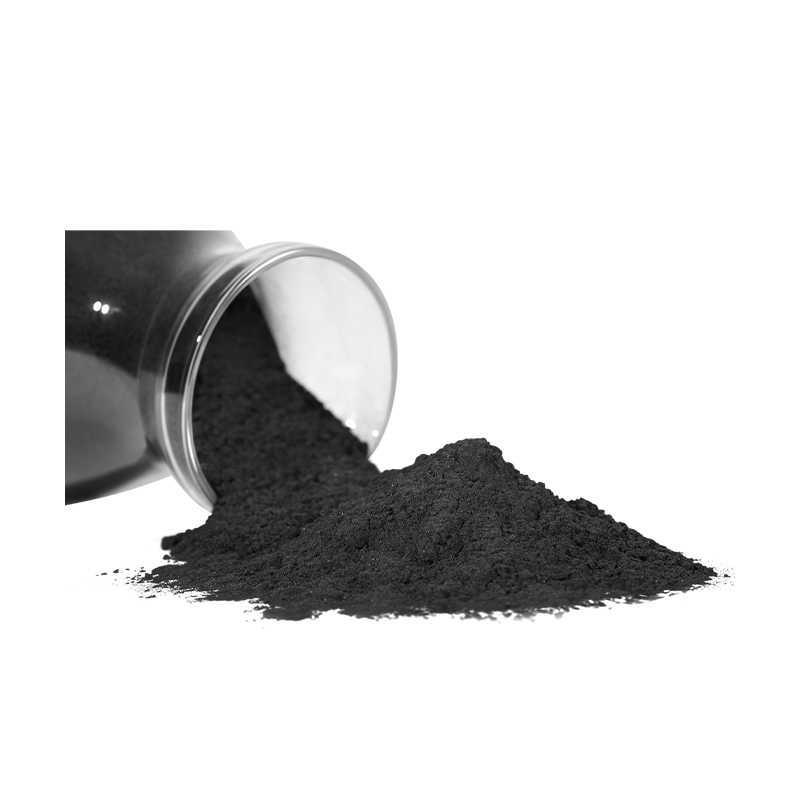
Generic material choices carry hidden penalties for your manufacturing lines. Using standard grades often leads to higher defect rates across your finished products. Thermal and electrical conductivity might fluctuate wildly across different incoming batches. You might face unexpected manufacturing downtime when unrefined powders clog feeding mechanisms. Sometimes, generic materials fail dispersion tests completely. Every halted production line costs your company money.
Custom specifications offer a direct solution to these process failures. Tailored material limits operational waste significantly. Paying a premium for engineered powders improves end-product yield predictably. This strategic approach drives long-term profitability by optimizing your entire material consumption rate. You stop paying for raw material you must eventually scrap.
We must redefine success in raw material procurement. You are not just buying carbon dust. You are securing a reliable, repeatable input. This input must integrate seamlessly into your existing production line. When a material matches your exact equipment capabilities, manufacturing becomes highly predictable. You gain total control over final product quality.
Common problems caused by off-the-shelf powders include:
Increased reject rates due to inconsistent particle dispersion during mixing.
Unpredictable thermal conductivity causing final product failure under stress.
Manufacturing downtime caused by equipment blockages from oversized particles.
Chemical contamination ruining sensitive electrolytic reactions.
Industry standards typically define pure carbon materials within strict thresholds. These thresholds usually span from 99.9% to 99.99% fixed carbon content. Hitting these precise numbers requires intense refinement processes. Suppliers must strip away volatile matter and burn off residual ash entirely.
"High purity" operates mostly as a marketing buzzword unless hard data backs it up. You must demand a specific Certificate of Analysis (CoA) for every single batch. This document should detail impurities in parts-per-million (ppm). Look for exact measurements of iron, sulfur, and silicon. High Purity Graphite Powder relies on these exact CoA metrics to guarantee performance in your factory. If a supplier refuses to provide ppm-level analytical data, you should find another vendor immediately.
Different industries react differently to specific trace elements lurking in the powder. Battery anode manufacturing cannot tolerate certain transition metals whatsoever. Elements like iron or copper cause severe parasitic reactions inside lithium-ion cells. These reactions degrade battery life quickly and cause thermal runaway. Aerospace components might fail catastrophically if silicon impurities compromise structural integrity under extreme heat.
You must establish strict requirements for supplier analytical testing. Insist they utilize techniques like ICP-OES (Inductively Coupled Plasma Optical Emission Spectroscopy). Alternatively, they can use XRF (X-ray Fluorescence) analysis. These advanced methods detect microscopic contaminants before they ruin your entire production run.
Physical shape dictates how powder behaves during your manufacturing process. You can choose spherical, flake, or amorphous structures. Each unique shape serves very distinct industrial applications.
Spherical graphite packs densely. This dense packing maximizes energy storage inside advanced batteries. Flake graphite provides excellent lubricity and thermal resistance. Amorphous graphite offers cost-effective solutions for less demanding metallurgical processes.
The physical shape directly controls tap density and surface area (BET). It also determines whether the final product exhibits isotropic or anisotropic properties. Flake shapes align under pressure, creating anisotropic conductivity. Spherical shapes provide more uniform, isotropic behavior across all axes. Selecting the correct Particle Morphology remains non-negotiable for optimized processing.
Consider this breakdown of common shapes and their primary functions:
Morphology Type | Key Physical Property | Ideal Manufacturing Application |
|---|---|---|
Spherical | High tap density, Isotropic | Lithium-ion battery anodes |
Flake | High lubricity, Anisotropic | Thermal management, Lubricants |
Amorphous | Cost-effective, Microcrystalline | Foundry facings, Metallurgy |
You must master PSD parameters to avoid processing disasters. D10, D50, and D90 metrics define the exact size range of your powder. D50 represents the median particle diameter. D10 shows the smallest 10 percent of your batch. D90 highlights the largest 10 percent.
Implementation realities often expose hidden formulation flaws. "Fines" are undersized particles lurking in the D10 range. Excessive fines disrupt slurry viscosity immediately. They absorb too much solvent during mixing phases. Fines also create dangerous dusting hazards on the factory floor. Tight PSD controls prevent these costly manufacturing headaches.
End-use applications demand entirely different conductive profiles. Thermal management interfaces require exceptionally high heat transfer rates. Conversely, conductive coatings need strong electrical pathways to dissipate static or carry current.
You must balance these parameters carefully based on your product goals. Conductive Graphite Powder can be tailored to prioritize one property over the other. Flake sizes and internal crystal shapes influence how electrons and phonons travel through the material matrix. Larger flakes generally improve thermal conductivity by minimizing particle-to-particle contact resistance.
Crystallinity measures internal structural perfection within the carbon lattice. Manufacturing heat treatment temperatures dictate this crucial property. Higher baking temperatures yield much better graphitization.
Excellent crystallinity directly boosts conductivity levels. Electrons move freely through highly ordered, perfectly aligned carbon planes. If your process requires maximum conductivity, you must verify the supplier's original graphitization temperatures. Sub-par heating cycles leave amorphous carbon behind, which acts as an insulator.
Do not demand maximum purity blindly. Sometimes, ultimate purity is not your true bottleneck. If your goal is raw conductivity, morphology or degree of graphitization matters significantly more. You might waste your budget on 99.99% purity when a well-graphitized 99.5% powder performs identically in your application. Always test the specific property governing your actual end-use.
Scaling up introduces severe friction points for material engineers. A 5kg sample might perform flawlessly in the research lab. However, moving to a 5,000kg production run changes the physics of mixing and dispersion entirely.
Factory equipment behaves differently at massive scales. Bulk density variations become magnified in large vats. You must run intermediate pilot trials to bridge this scaling gap effectively. Skipping pilot runs almost always guarantees batch failures.
Inconsistent raw material destroys production schedules and client trust. You need statistical process control (SPC) data from your vendors. Capable suppliers must provide Cpk and Ppk capability metrics regularly.
These statistical metrics prove they can maintain tight tolerances consistently. A single perfect sample batch means absolutely nothing. Graphite Customization fails entirely if batch two differs drastically from batch one. Aim for suppliers demonstrating a Cpk above 1.33 for critical PSD parameters.
Assess where your raw materials actually originate. Natural graphite relies on complex global mining operations. Synthetic graphite depends on petroleum coke supplies and energy-intensive graphitization.
Both sources face unique geopolitical and environmental constraints daily. These external factors impact delivery lead times severely. You must map these risks out clearly before committing to a single-source supplier. Dual-sourcing critical custom grades protects your ongoing manufacturing output.
You must audit potential suppliers rigorously before signing contracts. Ask detailed technical questions about their facilities. Do they have in-house milling, purification, and classification capabilities? Subcontracting these critical steps introduces massive quality risks.
Furthermore, do they use third-party validation for their analytical equipment? Internal tests sometimes hide calibration errors or operator mistakes. External audits guarantee honest, accurate reporting on your CoAs.
Always require standardized, globally recognized documentation. ISO 9001 and ISO 14001 certifications prove baseline operational competence. REACH and RoHS compliance are strictly mandatory for European markets. These legal documents protect your final product from sudden regulatory bans.
Establish a highly structured next step for material approval. Request a pilot sample first. You must set up a joint testing protocol with the vendor. Both parties must test the exact same batch using identical methods.
Define acceptable variance baselines clearly in writing. Do this before signing any master service agreement (MSA). When you finally purchase Custom Graphite Powder, this shared protocol prevents future disputes over rejected shipments.
Follow this standard sampling workflow:
Request a 1kg bench-scale sample for initial chemical validation.
Approve the CoA against your internal engineering specifications.
Order a 50kg to 100kg pilot batch for slurry or mixing trials.
Review PSD shift and dispersion behavior at the pilot scale.
Finalize the MSA with locked-in Cpk targets.
Specifying custom materials represents a strategic alignment between material science and supply chain risk management. You cannot treat engineered carbon as a generic commodity. Proper specification requires balancing morphology, purity, and trace element chemistry against your exact factory conditions. By mastering PSD controls and understanding graphitization levels, you protect your manufacturing yield.
Reiterate internally that evaluating your supplier's process control remains just as important as reading the material's specification sheet. Perfect lab results mean nothing without rigorous batch-to-batch consistency. Secure your supply chain by demanding transparent SPC data and verified CoAs.
We invite you to submit your current material specifications for a comprehensive technical review. Alternatively, request a custom sample tailored precisely to your distinct production parameters today. Our engineering team stands ready to optimize your material inputs.
A: The main difference lies in the intense refinement process. High purity variants undergo severe thermal or chemical treatments to strip away volatile matter and ash. This strict trace element reduction usually achieves greater than 99.9% fixed carbon. Standard grades retain more natural impurities, making them unsuitable for sensitive applications like battery anodes or aerospace components.
A: PSD directly impacts powder flowability, compaction density, and dispersion rates. A tight PSD ensures uniform mixing within liquids or polymers. If a batch contains excessive "fines" (undersized particles), it will spike slurry viscosity and cause clumping. Oversized particles can clog factory feeding mechanisms and create weak points in molded parts.
A: Achieving both requires balancing inherent trade-offs in morphology engineering. Spherical shapes provide the highest tap density but offer isotropic conductivity. Flake shapes maximize anisotropic conductivity but pack less densely. We set realistic expectations by blending specific particle shapes or utilizing advanced graphitization techniques to find the optimal middle ground for your application.
A: You must demand a batch-specific Certificate of Analysis (CoA) with every delivery. This document should strictly include D10, D50, and D90 metrics for particle size. It must also list the BET surface area, fixed carbon percentage, and a precise trace element breakdown (in ppm) verified by ICP-OES or XRF analysis.


