
- Home
- Products
- Solutions
- About
- Service
- Sustainability
- News
- Contact Us

Views: 0 Author: Site Editor Publish Time: 2026-10-28 Origin: Site


Choosing the wrong graphite grade can cause costly machining problems or premature component failure. Different isostatic graphite grades offer varying density, grain size, strength, purity, and thermal performance. Isostatic pressing creates relatively uniform properties across different directions, but individual grades still perform differently. Selecting materials based only on density, purity, or price can lead to unnecessary costs. The right specifications depend on your component's operating conditions, geometry, and performance requirements. Understanding these differences helps buyers avoid unsuitable materials and make more confident purchasing decisions. This guide explains which specifications deserve attention before requesting quotations or placing an order. You'll learn how to evaluate material properties, machining requirements, and quality documentation for reliable purchasing decisions.
Material selection should begin with properties affecting structural integrity and machining performance. Grain size, density, porosity, and mechanical strength deserve particular attention. However, no single specification determines whether a graphite grade is suitable.
Grain size influences the surface quality and dimensional detail of machined components. Fine-grain graphite generally supports smoother surfaces and more precise edges. This becomes important when manufacturing small holes, narrow slots, or thin walls. Buyers should distinguish average grain size from maximum grain size. A low average value does not guarantee the absence of larger particles. These particles may affect delicate features during machining.
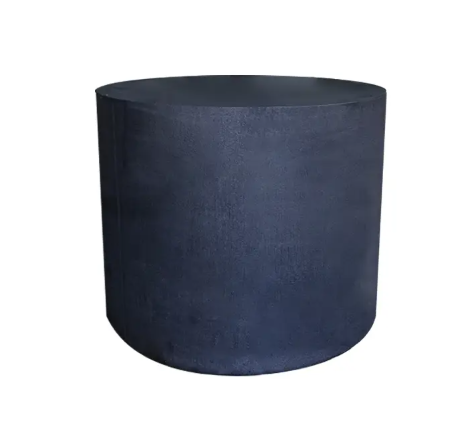
Bulk density describes the material's mass per unit volume. Higher density can indicate a more compact structure, but it does not guarantee superior performance. Porosity also deserves attention because graphite contains interconnected and isolated pores. Open pores may influence gas movement, liquid penetration, and process contamination. Buyers should therefore evaluate density and porosity as separate specifications.
Mechanical properties determine how graphite components respond to different operating loads. Flexural strength indicates resistance to bending failure. It becomes especially important for thin sections and components experiencing uneven support. Compressive strength describes resistance to crushing under applied pressure. It matters for support blocks, fixtures, and mechanically loaded components.
Hardness provides additional information about surface resistance and machining behavior. However, greater hardness does not automatically mean longer component life. Material toughness, wear conditions, and operating temperatures also influence durability. Compare mechanical properties using consistent testing methods and conditions. A typical datasheet value should not automatically become a guaranteed minimum.
Essential Specifications for Initial Material Selection
Specification | What Buyers Should Check | Main Purchasing Concern |
Grain Size | Average and maximum particle size | Machining precision and edge quality |
Bulk Density | Measured density and acceptable range | Material structure and consistency |
Porosity | Open porosity and pore characteristics | Permeability and process compatibility |
Flexural Strength | Minimum required strength | Resistance to bending failure |
Compressive Strength | Minimum required strength | Load-bearing performance |
Hardness | Measurement method and reported range | Machining and wear behavior |
These specifications provide an initial comparison framework. Final acceptance limits should reflect the intended application.
Thermal and electrical properties become critical when graphite operates inside heating systems. Buyers must consider both material performance and actual operating conditions.
Thermal conductivity describes how efficiently heat moves through a material. Higher conductivity can help distribute heat across heated components. However, excessive heat transfer may be undesirable in certain equipment designs. The coefficient of thermal expansion (CTE) describes dimensional changes during heating. A suitable CTE helps reduce thermal mismatch between graphite and adjoining materials. This becomes important during repeated heating and cooling cycles.
Thermal shock resistance also depends on strength, conductivity, expansion, and component geometry. It should not be judged through one property alone. Buyers should request thermal data measured across relevant temperature ranges. Room-temperature values may not represent actual furnace conditions.
Electrical resistivity affects current flow through graphite components. It becomes especially important when graphite serves as a resistance-heating element. Resistance depends on the material's resistivity and the component's dimensions. Even small dimensional changes may influence electrical heating behavior.
Operating temperature requires equally careful evaluation. Graphite performs differently in vacuum, inert gases, and oxygen-containing atmospheres. In particular, oxidation can significantly limit its useful life in air. A quoted maximum temperature does not guarantee suitability for every application. Exposure time, atmosphere, heating cycles, and mechanical loading also matter.
For heating applications, provide the supplier with these operating details:
Temperature range: Normal operating temperature and expected peak temperature.
Atmosphere: Vacuum, inert gas, or another specified process environment.
Thermal cycling: Heating frequency and cooling conditions.
Electrical requirements: Current, voltage, and resistance targets when applicable.
These details help suppliers evaluate material properties under realistic service conditions.
Purity requirements depend on contamination sensitivity and component exposure. Higher purity may improve process compatibility, but it also affects material costs. Structural consistency is equally important when repeatable performance matters.
Ash content represents the inorganic residue remaining after a defined oxidation test. Lower ash content generally indicates reduced inorganic contamination. However, it does not identify every impurity present in graphite. Certain processes require strict limits for individual metallic elements. Semiconductor applications may be sensitive to specific contaminants even at low concentrations. Buyers should request elemental analysis when overall ash content provides insufficient information. Purification can reduce selected impurities, depending on the treatment process. However, unnecessary purification may increase purchasing costs without improving actual component performance.
At SIAMC, we offer fine-grain, high-purity isotropic graphite for demanding industrial applications. Low ash content options down to 5 ppm are available for selected materials. Buyers should confirm the required purity and applicable testing conditions before ordering. The correct specification should identify both purity requirements and acceptable verification methods.
Isotropy describes relatively consistent material properties across different measurement directions. This characteristic supports predictable component behavior under complex loading and heating conditions. However, isotropic graphite does not necessarily exhibit perfectly identical properties in every direction. Critical applications may require additional directional measurements.
Production consistency also deserves attention when purchasing material for repeat manufacturing. Changes in density, strength, or resistivity may influence machining and component performance. Buyers should agree on acceptable property ranges for important specifications. These limits provide clearer acceptance criteria than nominal values alone. For repeat orders, batch identification and comparable test records improve traceability. They also help engineers investigate unexpected performance differences.
Different industries place different demands on graphite components. Selecting every material property at its highest available level rarely provides the best value. Buyers should instead prioritize specifications based on actual failure risks.
Semiconductor manufacturing often requires strict control over material contamination. Graphite components may contact sensitive process environments or operate near valuable production materials. Purity and elemental impurity limits can therefore become major purchasing criteria. Thermal stability and structural uniformity also influence component performance. Some applications require additional surface treatment or protective coatings. Buyers should verify coating compatibility before finalizing material specifications.
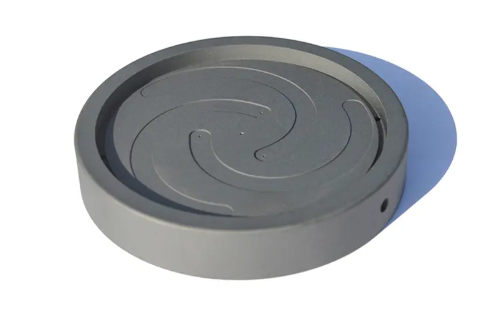
Photovoltaic processing introduces related concerns, particularly inside high-temperature production equipment. Temperature stability, thermal expansion, and material consistency can affect component reliability. Repeated heating cycles may create additional stresses around mounting points and adjoining materials. Engineers should evaluate these conditions before selecting a grade.
EDM electrodes require graphite capable of maintaining precise machined features. Grain size, structural consistency, and machinability are therefore important selection factors. Fine-grain materials can support detailed electrode geometries and consistent surface finishes. However, actual electrode wear also depends on discharge conditions and machining parameters.
Furnace components face different operating challenges. Thermal conductivity, expansion, strength, and oxidation behavior often receive greater attention. Heating elements must also meet electrical resistance requirements. Support fixtures may require additional strength under elevated temperatures.
Application-Based Specification Priorities
Application | Primary Specifications | Additional Requirements |
Semiconductor Processing | Purity, impurity profile, uniformity | Coating compatibility |
Photovoltaic Processing | Thermal stability, purity, CTE | Thermal cycling conditions |
Precision EDM | Grain size, uniformity, machinability | Electrode wear performance |
High-Temperature Furnaces | Thermal conductivity, CTE, strength | Operating atmosphere |
This comparison provides a useful starting point for grade selection. The final specification should still reflect individual equipment requirements.
Suitable material properties do not guarantee successful component manufacturing. Available block dimensions and machining requirements can significantly affect purchasing decisions.
Graphite is commonly supplied as raw blocks, blanks, or finished machined components. Buyers should identify the required supply form before requesting quotations. Raw block dimensions must provide sufficient material for final machining. Cutting allowances and dimensional variations may reduce usable stock. Complex components introduce additional manufacturing challenges. Thin walls, deep holes, narrow slots, and delicate edges require careful assessment.
Extremely tight tolerances may increase machining time, inspection requirements, and material waste. Buyers should distinguish critical dimensions from less demanding features. Technical drawings should clearly identify finished dimensions and tolerance requirements. They should also specify surface finish expectations where these affect component performance.
At SIAMC, we provide machined graphite parts and customized machining services. We can discuss component requirements using customer drawings and material specifications. Final manufacturing feasibility depends on geometry, tolerances, and available processing capabilities.
Before placing an order, confirm the following details:
Supply form: Raw block, prepared blank, or finished component.
Dimensions: Required stock size and final component geometry.
Tolerances: Critical dimensional limits and inspection requirements.
Surface finish: Functional surfaces requiring additional machining control.
Quantity: Prototype quantities or expected production volumes.
Early confirmation reduces quotation uncertainty and the risk of unusable components.
A technically suitable graphite grade still requires clear purchasing documentation. Written acceptance criteria help buyers compare suppliers and verify delivered materials.
Material datasheets usually describe typical properties for a particular grade. However, these values do not always represent guaranteed performance limits. Buyers should distinguish typical values from contractual acceptance requirements. Important properties may need defined minimums, maximums, or acceptable ranges.
Test methods also influence reported results. Mechanical strength measurements can vary according to specimen geometry and testing procedures. Thermal measurements may change across different temperature ranges. Purity results depend on the selected analytical methods.
For critical applications, request appropriate test reports or certificates of analysis. Batch-specific records may be necessary when material traceability matters. Acceptance criteria should clearly identify which results require verification. This approach reduces disagreements when delivered materials differ from expected values.
A complete purchasing specification should answer several practical questions. Each answer helps suppliers understand performance expectations and manufacturing requirements.
Isostatic Graphite Purchasing Checklist
1. Material grade: Which grade is required, and are alternatives acceptable?
2. Physical properties: What grain size, density, porosity, and strength limits apply?
3. Thermal performance: Which conductivity and expansion values matter during operation?
4. Purity: Are general ash limits sufficient, or is elemental analysis necessary?
5. Dimensions: Are raw blanks or fully machined components required?
6. Operating conditions: What temperatures, atmospheres, and loading conditions apply?
7. Quality documents: Which reports, inspection records, and certificates are required?
8. Commercial requirements: What quantities, delivery schedules, and packaging conditions are expected?
The final purchase order should connect these requirements to measurable acceptance criteria. Suppliers can then prepare quotations based on comparable technical expectations.
A complete specification also supports future repeat orders. Engineering teams can use the same criteria when evaluating replacement materials.
Selecting isostatic graphite requires matching material properties to actual application needs, rather than choosing the highest specifications. Grain size, density, strength, purity, and thermal behavior carry different importance across industrial applications. Buyers should first identify operating conditions and prioritize critical performance requirements. Confirming dimensions, machining feasibility, and quality documentation helps prevent purchasing errors and unnecessary costs. SIAMC Advanced Materials Co., Ltd. offers fine-grain, high-purity isostatic graphite and customized machining services for demanding applications. Our materials support precision manufacturing, thermal stability, and reliable component performance. Before ordering, prepare clear technical specifications and request comparable material test data. This approach supports confident purchasing decisions and long-term component reliability.
A: When ordering isostatic graphite, check grain size, bulk density, mechanical strength, purity, thermal conductivity, and electrical resistivity. Prioritize properties based on operating conditions and component requirements.
A: Finer grain sizes generally improve machining precision, surface finish, and edge quality. They are especially useful for intricate components requiring tight tolerances and detailed geometries.
A: Purity affects contamination risks in sensitive applications. High-purity isostatic graphite is often preferred for semiconductor processing, where metallic impurities may compromise product quality and manufacturing reliability.
A: Higher density does not automatically guarantee better performance. The best isostatic graphite grade depends on strength, porosity, thermal properties, and the specific requirements of your application.
A: Material grade, purity, grain size, block dimensions, and machining complexity affect pricing. Custom tolerances, additional purification, testing requirements, and order quantities can also increase purchasing costs.


