
- Home
- Products
- Solutions
- About
- Service
- Sustainability
- News
- Contact Us

Views: 0 Author: Site Editor Publish Time: 2026-11-02 Origin: Site


Heat resistance alone cannot guarantee accuracy in precision thermal systems. Temperature differences and material contamination can compromise manufacturing results. Isostatic graphite is a fine-grained carbon material with relatively uniform properties. Its thermal conductivity, dimensional stability, and machinability support demanding high-temperature applications. Engineers use it in semiconductor processing, crystal growth, vacuum furnaces, and photovoltaic manufacturing. It helps maintain controlled heat distribution, precise component positioning, and cleaner processing conditions. But where does it provide the greatest practical value? Explore its key applications, the components that benefit most, and the conditions that justify choosing it over conventional graphite.
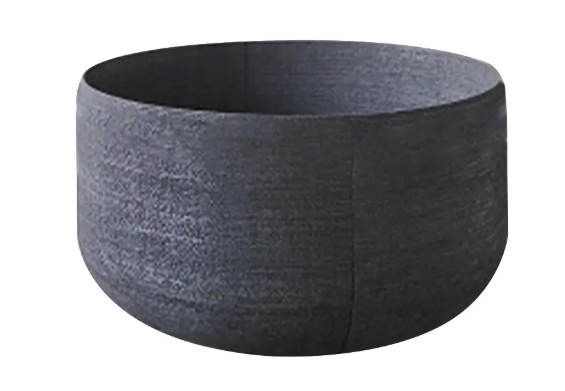
Isostatic graphite supports several industrial processes requiring controlled heating and stable component geometry. Its applications extend beyond simple heat resistance into precision temperature management. The following applications demonstrate where its properties provide practical advantages.
Semiconductor production demands careful temperature control and strict contamination management. Small variations can affect crystal quality, wafer processing, and production yields.
Graphite components support these processes through several important functions:
Susceptors: Support wafers or substrates while helping manage heat transfer.
Heating elements: Generate heat through electrical resistance in suitable furnace designs.
Crucible supports: Position processing vessels during high-temperature operations.
Thermal fixtures: Maintain component alignment throughout heating and cooling cycles.
Fine-grained graphite allows engineers to machine complex shapes accurately. This becomes particularly important when components require precise dimensions or detailed surfaces. High-purity grades also help reduce contamination risks. However, graphite purity alone cannot guarantee a clean processing environment. Surface particles, furnace conditions, and surrounding materials require equal attention.
Some semiconductor processes expose components to reactive gases. These applications may require protective coatings or alternative materials. Therefore, engineers must evaluate both thermal performance and chemical compatibility before selecting graphite components.
Vacuum furnaces operate under demanding conditions involving high temperatures and repeated thermal cycling. Common processes include brazing, sintering, annealing, and specialized heat treatment. Isostatic graphite can serve different functions inside these systems. Heating elements convert electrical energy into heat through resistance. Support fixtures position workpieces during processing.
Other applications include furnace trays, structural supports, and precisely machined holding components. Its relatively low thermal expansion helps reduce dimensional changes during heating. Good thermal shock resistance also supports repeated operating cycles under suitable conditions.
Consider a furnace fixture holding several metal components during vacuum brazing. The fixture must preserve their alignment while temperatures change significantly. Uncontrolled movement could affect joint positioning and final assembly quality. Graphite provides a useful option when its mechanical properties meet these requirements.
However, vacuum operation does not eliminate every material compatibility concern. Engineers must consider residual gases, process vapors, and contact reactions. Mechanical loads also require careful evaluation, especially for large or thin components.
Photovoltaic manufacturing uses high-temperature equipment during silicon crystal production. These systems require stable heating conditions and accurately positioned internal components.
Graphite commonly supports several parts of the thermal assembly:
Crucible support structures that maintain vessel positioning.
Heating components designed for controlled energy delivery.
Support rings and fixtures used around thermal assemblies.
Structural components supporting insulation and other furnace elements.
During crystal growth, temperature distribution influences solidification behavior and process consistency. Poorly positioned components can disturb thermal conditions inside the furnace.
Precision-machined graphite helps maintain the intended geometry of these assemblies. Its thermal properties also support predictable equipment behavior. However, semiconductor and photovoltaic systems may have different contamination limits. Their equipment designs and processing conditions can also vary considerably. Engineers should therefore specify graphite grades according to actual process requirements.
The following table summarizes important application differences.
Thermal Application | Typical Graphite Components | Main Performance Requirements |
Semiconductor processing | Susceptors, heaters, support fixtures | High purity, dimensional accuracy |
Crystal growth | Crucible supports, thermal fixtures | Thermal stability, controlled contamination |
Vacuum heat treatment | Heating elements, trays, supports | Thermal cycling resistance, mechanical reliability |
Photovoltaic manufacturing | Heater components, support assemblies | Temperature control, stable positioning |
Precision thermal equipment depends on more than reaching a target temperature. It must also maintain predictable conditions throughout the process. Graphite properties influence heat distribution, thermal stress, and component positioning.
Thermal conductivity determines how efficiently heat moves through a material. This property directly affects graphite components exposed to temperature gradients. For example, a graphite susceptor transfers heat across its structure during processing. Consistent thermal properties help designers predict how this transfer occurs.
Isostatic pressing produces graphite with relatively uniform properties across different directions. This reduces the directional differences sometimes found in conventionally formed materials. However, material uniformity does not automatically create uniform furnace temperatures.
Actual temperature distribution also depends on several factors:
Component thickness and overall geometry.
Heater placement and electrical power distribution.
Thermal contact between neighboring surfaces.
Radiation exchange and surrounding insulation.
Engineers must consider these factors together when designing heating assemblies. Higher thermal conductivity can improve heat spreading in suitable applications. However, it may also increase unwanted heat loss through structural supports. The best graphite grade therefore depends on the component's intended thermal function.
Temperature changes cause materials to expand or contract. Excessive expansion can disturb component alignment and create mechanical stress. Graphite generally exhibits relatively low thermal expansion compared with many engineering materials. This makes it useful for assemblies requiring stable positioning during heating.
Thermal shock resistance provides another advantage. Components may experience rapid temperature changes during furnace startup or cooling. Materials must tolerate the resulting temperature differences without developing damaging cracks. Fine-grained graphite also supports accurate machining. Engineers can produce detailed grooves, openings, and mounting features for specialized equipment.
However, machining accuracy at room temperature does not guarantee identical dimensions during operation. Designers must still calculate thermal expansion and provide suitable clearances. They should also avoid rigid mounting arrangements that restrict natural movement. These precautions help protect components during repeated thermal cycles.
Material selection should begin with measurable performance requirements. General descriptions such as high strength or high purity provide insufficient engineering detail. Engineers need properties directly related to their intended operating conditions.
Graphite purity becomes particularly important when processing contamination-sensitive materials. Residual impurities may enter the process through several possible mechanisms. High-purity grades help reduce this risk, especially in semiconductor and crystal growth equipment. However, engineers should specify acceptable impurity levels rather than relying on broad classifications.
Grain size also influences component quality. Fine-grained materials generally support better surface finishes and intricate machining features. This matters when manufacturing thin walls, narrow grooves, or precision positioning fixtures. Bulk density provides useful information about the material's structure. However, density alone does not fully describe open porosity or gas penetration behavior. These properties should be evaluated separately when process conditions require them.
At SIAMC, we offer fine-grain, high-purity isotropic graphite for demanding industrial applications. Our available grades include low-ash options reaching 5 ppm under specified material conditions. They also provide good thermal conductivity, strength, and thermal shock resistance. Individual grade specifications must still be checked before selecting material for critical equipment.
Graphite components experience thermal and mechanical stresses during normal operation. Their design must account for both. Important properties include thermal conductivity, expansion coefficient, flexural strength, and compressive strength. Electrical resistivity also matters when graphite functions as a heating element. Engineers should review how these properties behave across the expected temperature range. Room-temperature measurements may not fully represent actual operating performance.
Component geometry can introduce additional risks. Long unsupported sections may experience bending under mechanical loads. Sharp corners can concentrate stress during thermal cycling. Therefore, material strength alone cannot determine component reliability. Designers should combine suitable property data with realistic loading calculations.
A practical material selection checklist should include:
Operating temperature: Define normal, maximum, and transient temperatures.
Furnace atmosphere: Identify oxygen exposure and potentially reactive gases.
Purity requirements: Establish acceptable impurity and particle contamination limits.
Component geometry: Review dimensions, thickness, and machining tolerances.
Mechanical loading: Evaluate support conditions and applied forces.
Thermal properties: Confirm conductivity, expansion, strength, and cycling requirements.
These checks help eliminate unsuitable grades before detailed component design begins.
Different graphite manufacturing methods produce materials with different structural characteristics. Common alternatives include extrusion-formed and vibration-molded graphite. Isostatic graphite typically offers fine grain sizes and relatively uniform directional properties. These characteristics support intricate machining and consistent mechanical behavior. However, conventional graphite can remain suitable for many high-temperature applications. The correct choice depends on component requirements rather than manufacturing method alone.
Consider three practical situations.
1. Precision Semiconductor Fixture
A semiconductor fixture requires detailed machining and controlled contamination levels. Fine-grained, high-purity graphite may provide a suitable solution. Its uniform structure supports machining consistency and predictable component behavior.
2. Large Furnace Support Block
A large furnace support may primarily require mechanical strength and dimensional availability. A suitable vibration-molded graphite grade could meet these needs economically. Using expensive fine-grained material may provide little additional operational value.
3. Electrical Heating Component
A graphite heater must deliver suitable electrical resistance and predictable thermal performance. Its dimensions also influence heating behavior and power requirements. Engineers should compare actual resistivity values across candidate grades. Material cost becomes relevant after performance requirements have been established.
A lower-cost grade may offer better overall value when it satisfies the necessary conditions. Conversely, critical components may justify higher material costs through improved consistency. The objective is not simply choosing the strongest or purest graphite. It is selecting a verified grade suitable for the intended component.
Isostatic graphite offers valuable thermal characteristics, but its performance has practical limits. Understanding these limits helps prevent premature failure and unnecessary replacement. Furnace atmosphere, thermal cycling, and mechanical design deserve particular attention.
Graphite can oxidize when exposed to oxygen at elevated temperatures. Oxidation gradually removes material and can weaken the component. The reaction rate depends on temperature, oxygen availability, and material characteristics. Therefore, graphite should not automatically be selected for continuous high-temperature operation in air.
Vacuum and protective atmospheres can reduce certain oxidation risks. However, they do not guarantee complete chemical compatibility. Some processing gases and molten materials may react with carbon. These interactions can damage graphite surfaces or contaminate processed materials.
Protective coatings may help in specific applications. Their suitability depends on temperature, atmosphere, and coating compatibility. Clean handling also matters in semiconductor environments. Machining residues and loose particles can create contamination problems even when material purity is high.
Repeated heating and cooling expose graphite components to changing internal stresses. Uneven temperature distribution can intensify these effects. Thermal shock resistance helps, but it cannot prevent every failure. Poor fixture design may concentrate mechanical loads around thin sections. Sharp edges and restricted expansion can create additional stress.
Engineers should inspect components regularly for:
Visible cracking or chipped edges.
Surface erosion and oxidation damage.
Changes in critical dimensions.
Excessive wear around contact points.
Inspection frequency should reflect operating severity and component importance. Replacing damaged components before failure can reduce unexpected furnace downtime. It also helps maintain more consistent processing conditions.
A reliable graphite specification begins with understanding the component's actual function. Engineers should define how it will perform inside the thermal system. A heating element requires different properties from a structural support. A semiconductor fixture may have stricter contamination limits than a general furnace tray.
These differences should guide the selection process.
Step 1: Define the Operating Environment
Document the operating temperature, furnace atmosphere, and expected thermal cycles. Include maximum temperatures and unusual startup conditions.
Step 2: Identify Material Requirements
Specify grain size, density, purity, thermal conductivity, and relevant strength values. Add electrical resistivity requirements when designing heating elements.
Step 3: Review Component Geometry
Provide accurate drawings showing dimensions, tolerances, and critical surfaces. Identify thin sections and features requiring special machining attention.
Step 4: Evaluate Mechanical and Thermal Risks
Review support arrangements, expansion clearances, and potential stress concentrations. Consider thermal modeling when component geometry or temperature gradients become complex.
Step 5: Verify Manufacturing and Inspection Requirements
Determine whether material certificates, dimensional reports, or additional testing are necessary. Critical applications may also require sample qualification before production approval.
At SIAMC, we provide graphite machining, purification, and material performance testing services. We can support customized component evaluation based on supplied drawings and operating requirements. However, production approval should follow representative testing whenever component failure presents significant risks. The selected grade must perform reliably under actual operating conditions.
Isostatic graphite plays an important role in precision thermal systems requiring stable temperatures, accurate dimensions, and controlled contamination. Its properties support semiconductor processing, crystal growth, vacuum furnaces, and photovoltaic manufacturing. Fine-grained, high-purity grades are ideal for complex components and contamination-sensitive processes. Conventional graphite may offer better value for less demanding applications. Engineers should evaluate furnace atmosphere, thermal cycles, and mechanical loads before selecting materials. SIAMC Advanced Materials Co., Ltd. provides high-purity graphite materials and customized machining solutions for demanding thermal applications. Our products offer consistent thermal performance, precise machinability, and reliable dimensional stability. We help customers select suitable materials and verify component requirements for dependable high-temperature operation.
A: Isostatic graphite is used for heating elements, susceptors, crucible supports, and thermal fixtures. These components support controlled heating, dimensional stability, and reliable operation in semiconductor processing and vacuum furnaces.
A: Isostatic graphite offers uniform properties, fine grain structure, and excellent machinability. High-purity grades help reduce contamination risks while supporting precise temperature control and stable component positioning.
A: Isostatic graphite provides more uniform directional properties and supports intricate machining. Conventional graphite may cost less for larger, simpler furnace components with less demanding precision requirements.
A: Isostatic graphite offers good thermal shock resistance and relatively low thermal expansion. However, rapid temperature changes, uneven heating, and mechanical constraints can still cause cracking or premature component failure.
A: High-purity graphite helps minimize contamination from residual impurities during crystal growth. It supports cleaner processing conditions, especially where graphite components operate near sensitive materials or heated surfaces.


