
- Home
- Products
- Solutions
- About
- Service
- Sustainability
- News
- Contact Us

Views: 0 Author: Site Editor Publish Time: 2026-07-01 Origin: Site


In advanced manufacturing sectors like semiconductors, energy storage, and aerospace, standard graphite often fails. Microscopic trace impurities cause unacceptable defects in these highly demanding environments. These defects lead to costly product recalls and catastrophic system failures. You need a material built to exacting standards to guarantee performance under extreme stress.
We must clarify a critical point. "High purity" is not just a marketing buzzword used to inflate material prices. It represents a strict metallurgical classification. Typically, this classification requires achieving a carbon content ranging from 99.9% to an ultra-pure 99.999%.
We wrote this article to equip procurement and engineering teams with actionable technical criteria. You will learn how to evaluate High Purity Graphite Powder effectively. We will explore key production variables, testing methodologies, and ways to vet suppliers confidently. By the end, you will know exactly what specifications matter most for your proprietary production line.
High purity graphite is defined by ultra-low ash content and precise carbon purity (99.9%+), directly impacting thermal and electrical conductivity.
The choice between chemical leaching and thermal purification services dictates the material's final cost, environmental compliance, and trace element profile.
Matching particle size distribution (PSD) and purity levels to specific Graphite Powder Applications prevents over-specifying (wasting budget) or under-specifying (risking product failure).
Reliable procurement requires auditing a supplier’s lot-to-lot consistency and demanding rigorous third-party trace element analysis (e.g., ICP-OES).
When sourcing a dependable Graphite Powder Product, you must establish verifiable baseline metrics. Purity thresholds follow a distinct nomenclature system. This industry standard denotes the number of nines in the carbon percentage. A 3N grade indicates 99.9% carbon purity. A 4N grade means 99.99%, while a 5N grade reaches 99.999%.
Ash content strictly dictates this purity rating. Ash represents the non-carbon metallic and non-metallic impurities left behind after complete combustion. In high-stress environments, trace amounts of iron, silicon, aluminum, or sulfur act as primary failure points. Iron contamination creates conductive bridges. These microscopic bridges cause short circuits in lithium-ion battery anodes. Silicon and aluminum form abrasive compounds. These hard compounds destroy mechanical seals in specialty lubricant applications. Sulfur outgassing ruins vacuum chamber environments in semiconductor foundries.
Physical characteristics also determine how the powder behaves during manufacturing. Particle Size Distribution (PSD) affects packing density and material flowability. Morphology refers to the physical shape of the individual particles. Flake graphite offers excellent lubricity for friction materials. Synthetic spherical graphite maximizes energy density for battery cells. Specific surface area, measured by BET testing, indicates the material's porosity. This metric directly controls chemical reactivity.
You must evaluate these metrics using hard evidence. Never take supplier marketing claims at face value. Always demand a comprehensive Certificate of Analysis (CoA) for every single batch.
Purity Grade | Carbon Content | Maximum Ash Content | Common Target Industry |
|---|---|---|---|
3N | 99.9% | 1000 ppm | Standard Lubricants, Base Anodes |
4N | 99.99% | 100 ppm | Advanced Energy Storage, Aerospace |
5N | 99.999% | 10 ppm | Semiconductors, Nuclear Reactors |
Best Practice: Always align your impurity tolerance limits directly to your failure mode analysis. Do not demand zero parts-per-million for an element unless it actively harms your specific application.
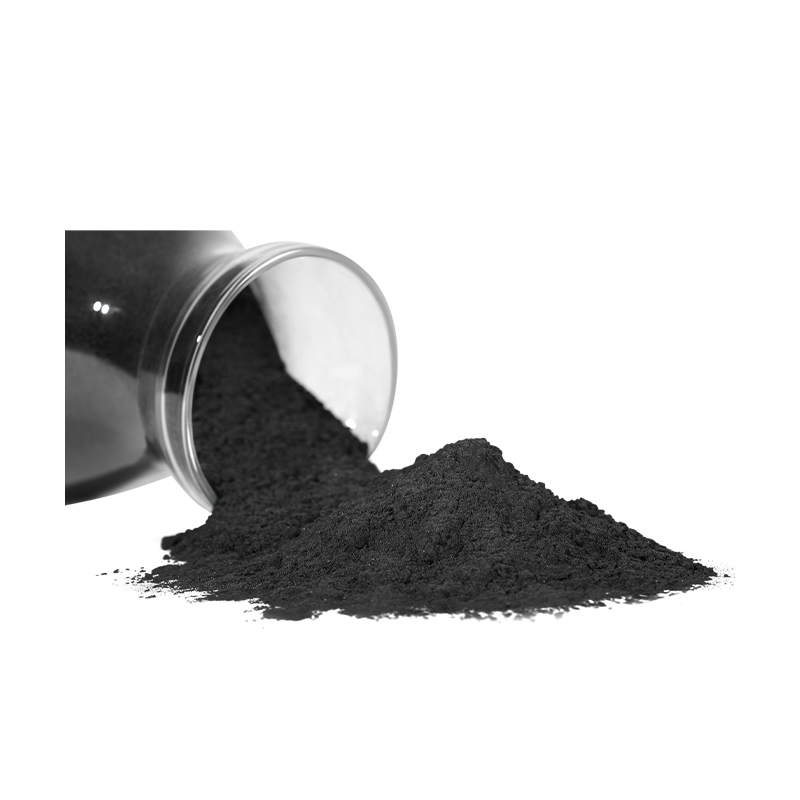
Manufacturing processes directly impact end-use performance, material costs, and compliance risks. Understanding these refinement methods helps you evaluate suppliers effectively.
Production begins by mechanically reducing natural flake or synthetic graphite. Manufacturers use specialized heavy mills to crush the raw material into ultra-fine powders. However, this mechanical process introduces a massive risk of cross-contamination. Traditional steel milling equipment constantly sheds trace iron particles into the carbon matrix.
Premium manufacturers completely mitigate this risk. They use ceramic-lined jet mills instead of steel impactors. Jet milling uses high-velocity compressed air to crash graphite particles into each other. This method avoids metal contact entirely. Elite suppliers also implement strict cleanroom controls to keep ambient warehouse dust away from the active powder.
Chemical purification uses harsh industrial acids to dissolve silicate and metallic impurities. The process typically relies on hydrofluoric (HF), sulfuric, or hydrochloric acids. These acidic solutions aggressively attack the impurities trapped deep within the graphite layers. Workers then repeatedly wash the graphite to remove the dissolved toxic waste.
For buyers, acid leaching offers a distinctly lower baseline energy cost. However, it poses serious environmental and ESG compliance challenges. Toxic acid disposal requires rigorous regulatory oversight. Furthermore, trace acid residues often remain trapped in the final powder. These microscopic residues act as corrosive agents.
Common Mistake: Relying on chemically leached graphite for high-vacuum applications. The residual trace acids will continuously outgas. This outgassing severely corrodes expensive vacuum pumps over time.
Thermal purification represents the absolute gold standard for a premium Graphite Purification Service. The process involves heating the graphite inside specialized vacuum furnaces. Operational temperatures easily exceed 2500°C. Technicians carefully introduce halogen gases, such as chlorine or fluorine, directly into the chamber. The immense heat and reactive gases vaporize the internal impurities entirely.
This sophisticated method reliably achieves the 99.999% (5N) purity required for nuclear and semiconductor manufacturing. It carries a much higher upfront manufacturing cost due to massive electricity requirements. Yet, it completely eliminates the risks of acid residues. The resulting powder offers unmatched structural integrity, chemical stability, and predictable performance.
Aligning material specifications with industry-specific success criteria prevents costly engineering mistakes. Here is how different highly regulated sectors utilize this advanced material.
Lithium-Ion Batteries (Anode Material): Energy storage relies on high purity to prevent parasitic side reactions. Impurities degrade overall battery life and dramatically increase thermal runaway risks. Battery engineers focus heavily on tap density and spherical morphology. A perfectly spherical particle maximizes lithium intercalation. It also significantly reduces mechanical swelling during continuous charge cycles.
Semiconductor & Photovoltaic Manufacturing: Crystal pulling and epitaxy processes tolerate zero material defects. This sector strictly requires ultra-high purity grades (5N+). Even single parts-per-billion contamination can ruin thousands of expensive silicon wafers.
Specialty Lubricants & Friction Materials: Aerospace mechanisms and heavy machinery need lubricants built to survive extreme temperatures. These applications demand a highly consistent particle size distribution. They also require the complete absence of abrasive silica impurities to maintain lubricity under severe mechanical loads.
Nuclear Reactors: Nuclear facilities rely on graphite blocks and powders to slow down fast neutrons. This essential moderation sustains the safe nuclear chain reaction. Nuclear applications demand extremely low Equivalent Boron Content (EBC) levels. Boron acts as a highly effective neutron poison. It absorbs neutrons rapidly, so removing it ensures proper reactor moderation.
Selecting the right product involves much more than checking a purity box on a supplier spec sheet. You need a comprehensive auditing framework to protect your production line.
Cost versus purity trade-offs require careful financial navigation. Over-engineering destroys your project profit margins. We recommend building a straightforward framework to decide when 99.9% remains sufficient. Use 3N grades for standard industrial lubricants or basic friction composites. Reserve the 99.99% or 99.999% premium grades as absolute non-negotiable requirements for semiconductors or aerospace seals.
Lot-to-lot consistency remains the biggest hidden danger in bulk graphite procurement. A supplier might deliver a perfect sample batch but fail miserably on the third bulk delivery. You must evaluate a prospective supplier's Statistical Process Control (SPC). Ask for historical data showing their standard deviation over at least thirty consecutive production runs. A narrow standard deviation proves they control their raw material inputs effectively.
Testing and verification capabilities separate reliable partners from risky discount vendors. Look closely at the supplier’s internal laboratory infrastructure. Do they rely on outdated chemical titration methods? You should expect them to use Inductively Coupled Plasma Optical Emission Spectroscopy (ICP-OES). This highly advanced equipment allows for exact part-per-million or part-per-billion level detection of trace elements.
Finally, carefully assess their custom engineering capabilities. Off-the-shelf bulk powders rarely meet the exact needs of proprietary manufacturing lines. A top-tier supplier will gladly adjust the particle size distribution. They will tailor the specific purity profile to match your exact engineering requirements perfectly.
Procurement success extends well beyond the initial purchase order. You must handle the material correctly upon arrival and secure your long-term supply chain against global disruptions.
High purity carbon materials act as highly reactive and absorbent sponges. They easily pull moisture, odors, and airborne contaminants from the ambient warehouse environment. You must enforce strict incoming packaging requirements. Specify moisture-barrier packaging, such as heavy-duty vacuum-sealed aluminum bags. Handle the bulk material only in cleanroom environments to prevent secondary contamination before mixing.
Common Mistake: Storing partial bags of high purity powder on open pallet racks. Always reseal any unused powder immediately using nitrogen backfill methods. Once the material absorbs water weight, its flow characteristics change dramatically, ruining batch mixing ratios.
Geopolitical supply chain constraints heavily impact raw graphite availability worldwide. Export controls on critical battery minerals can halt your production overnight. You must address this harsh reality by proactively diversifying your supply origins. Balance your procurement pipelines between natural flake sources and localized synthetic graphite producers. This strategic diversification builds necessary corporate resilience.
When rolling out a new powder source in your manufacturing line, strictly follow this pilot testing protocol:
Lab Scale Validation: Test small initial batches in controlled laboratory environments to verify chemical compatibility and baseline purity claims.
Pilot Production Run: Integrate the approved powder into a limited pilot production line. Evaluate automated flow rates, mixing behavior, and potential equipment wear.
Quality Assurance Testing: Subject the resulting pilot products to accelerated life cycle testing and severe thermal stress evaluations.
Full Production Integration: Gradually scale up your monthly purchasing volumes only after the pilot parts pass all critical end-user specifications.
Getting your high purity graphite specifications right delivers immense business impact. It directly mitigates catastrophic manufacturing risks, elevates final product performance, and drives long-term cost efficiency. Standardizing your analytical approach prevents unexpected line shutdowns caused by invisible trace contamination.
Your immediate next step requires gathering verifiable material data. Start by requesting technical data sheets (TDS) and comprehensive CoAs from prospective suppliers. You should immediately order small material samples for baseline internal testing. Compare these new samples directly against your current inventory performance.
We invite you to consult with a qualified materials engineering specialist today. A professional audit of your current graphite specifications will reveal immediate optimization opportunities and help secure your long-term supply chain.
A: Natural flake graphite is mined directly from the earth and then purified. It offers excellent natural lubricity and lower baseline costs. Synthetic graphite is artificially manufactured from petroleum coke at extreme temperatures. Synthetic variants provide superior structural consistency and achieve higher theoretical maximum purity limits.
A: Purity testing relies heavily on two primary laboratory methods. Loss on Ignition (LOI) testing burns the carbon away completely to measure the remaining basic ash content. For highly precise trace element specifics, laboratories use Inductively Coupled Plasma Mass Spectrometry (ICP-MS).
A: Graphite itself does not chemically degrade over time. However, it highly absorbs ambient moisture and warehouse odors. If stored improperly, it quickly becomes contaminated. To maximize shelf life, keep the powder inside its original vacuum-sealed, moisture-barrier packaging within a climate-controlled room.
A: Chemical acid leaching faces strict global environmental regulations regarding toxic wastewater disposal and mandatory ESG reporting. Thermal purification avoids hazardous liquid waste entirely but consumes massive electrical energy. Buyers must navigate local sourcing laws to ensure their chosen purification method remains fully compliant.


