
- Home
- Products
- Solutions
- About
- Service
- Sustainability
- News
- Contact Us

Views: 0 Author: Site Editor Publish Time: 2026-10-26 Origin: Site


Upgrading thermal zones in vacuum and inert gas furnaces demands robust materials. You must balance thermal efficiency against long-term operational longevity. Legacy solutions often fall short under these extreme demands. Rigid graphite boards or thick metallic refractory shields typically introduce high thermal mass. They extend heating cycle times and suffer from premature structural fatigue over repeated cycles. Conversely, modern flexible graphite felt has emerged as the definitive standard for high-performance environments. Specifying the exact variant requires careful analysis. You must match precursor materials, purity levels, and installation techniques to your specific furnace operating conditions. This comprehensive guide details everything engineers need to know. We will explore key material differences, essential technical specifications, and proven installation designs. You will learn how to optimize thermal zones and improve overall processing efficiency safely.
Operators frequently look for ways to optimize throughput without compromising temperature uniformity. When you implement graphite felt insulation, you immediately reduce the thermal mass of your hot zone. Solid graphite boards and traditional metallic shields retain significant heat. They force your equipment to work harder and longer during each operational phase.
Flexible felt materials possess a remarkably low density. They typically weigh a fraction of their rigid counterparts. This lower density directly translates to a lower heat capacity. Your furnace no longer wastes energy heating heavy structural panels. Instead, energy goes directly into processing your workload. A lighter hot zone structure also places less mechanical strain on furnace support frames.
Lower thermal mass yields rapid heat-up and cool-down rates. Fast cycles improve daily throughput significantly. During cooling phases, furnaces equipped with lightweight felt dissipate heat quickly. This rapid dissipation allows operators to safely open chambers sooner. You avoid the prolonged waiting periods associated with dense refractory metals or thick solid graphite blocks.
Thermal conductivity determines how much heat escapes the hot zone. Flexible carbon and graphite felts trap radiant heat exceptionally well. Their highly porous structure restricts conductive and convective heat transfer. During extended soaking times, the furnace heating elements draw less power to maintain target temperatures. You capture immediate energy savings over continuous production shifts.
Rigid panels fail when applied to complex hot zone geometries. They require excessive machining, generate harmful dust, and leave gaps at joints. Flexible felt conforms effortlessly to curved surfaces. Installers can custom-wrap cylindrical chambers or irregular support structures easily. This flexibility ensures a tight, continuous thermal barrier devoid of cold spots.
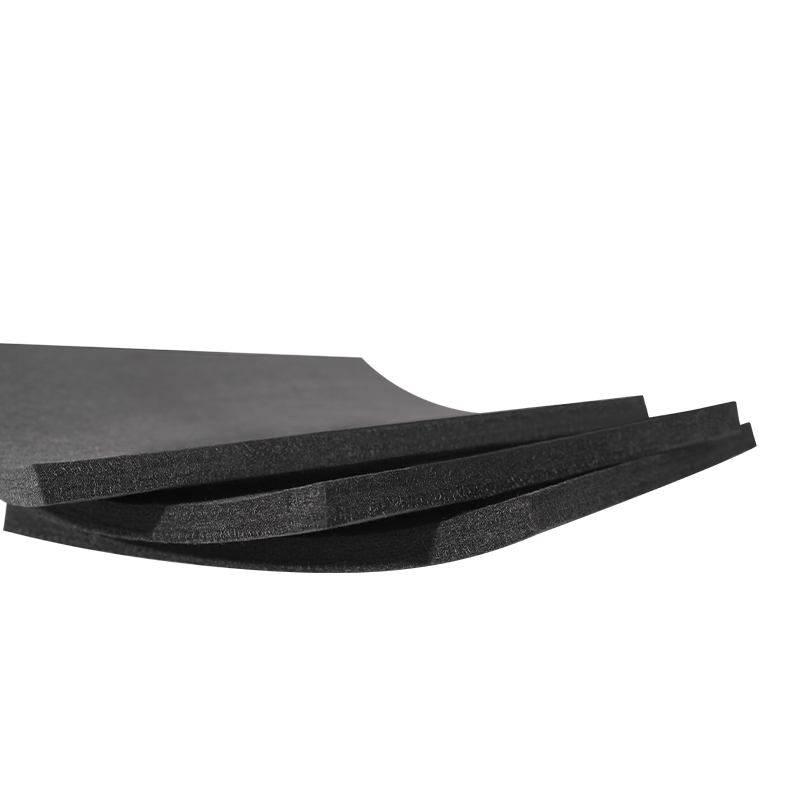
Manufacturers produce graphite felts using different precursor fibers. Polyacrylonitrile (PAN) and Rayon represent the two primary bases. Each precursor dictates the final mechanical and thermal properties of the felt. Engineers must align these characteristics with specific process demands to ensure optimal performance.
PAN-based materials dominate standard vacuum furnace setups. They offer higher tensile strength and rugged durability. Maintenance crews find PAN felt easier to handle without causing tears or severe fiber disruption. It provides better inherent oxidation resistance compared to alternatives. Cost-conscious facility managers often select PAN-based felt for general-purpose applications. It serves excellently as an industrial heat shield in environments where physical durability matters most.
Rayon-based fibers undergo a different carbonization process. This results in a softer texture and superior insulation properties at extreme temperatures. Rayon-based felt typically achieves lower thermal conductivity above 2000°C. It inherently produces fewer loose particulates. Industries highly sensitive to carbon shedding rely on this variant. Semiconductor manufacturing, aerospace brazing, and medical device processing often mandate Rayon felt. It functions flawlessly as premium high temperature furnace insulation.
Precursor Material Comparison Matrix
| Property | PAN-Based Felt | Rayon-Based Felt |
|---|---|---|
| Tensile Strength | High (Resists tearing during handling) | Moderate (Softer, more delicate) |
| Thermal Conductivity | Excellent up to 2000°C | Superior above 2000°C |
| Purity Levels | Standard industrial purity | Ultra-high purity options available |
| Particulate Shedding | Moderate | Very Low |
| Relative Material Cost | Lower upfront investment | Higher premium investment |
Relying solely on marketing brochures leads to poor material selection. You must analyze concrete technical specifications. Understanding thermal limits, purity metrics, and physical behaviors ensures safe and efficient furnace operation.
Atmosphere dictates temperature limits. In vacuum or inert gas environments (like argon or nitrogen), high-quality felt operates securely up to 3000°C. However, introducing oxygen changes everything. In oxidizing atmospheres, carbon-based materials begin degrading rapidly around 350°C. You must never utilize these materials in high-temperature air furnaces. The material will oxidize into carbon dioxide gas, completely destroying the insulation.
Contamination ruins sensitive workloads. Ash content measures the inorganic impurities remaining after carbonization. You should evaluate the parts-per-million (ppm) ash rating. Standard industrial felt might contain 1000 ppm ash. High-purity variants, processed through specialized halogen purification, often drop below 20 ppm. High ash content introduces metallic impurities into the furnace environment. These impurities vaporize at high temperatures and settle onto your products.
Vendors supply thermal conductivity curves across various temperature gradients. You cannot rely on a single conductivity number. Insulation behavior shifts drastically as temperatures rise from 1000°C to 2500°C. Review the curves carefully. Ensure the material provides adequate resistance at your maximum soaking temperature. This prevents sudden spikes in outer shell temperatures.
Newly installed felt contains trapped gases. Anticipate initial pump-down outgassing during the first thermal cycle. Run a dedicated bake-out cycle before introducing valuable workloads. Furthermore, expect dimensional shrinkage. Most materials shrink between 1% and 3% during their initial high-temperature exposure. You must design overlapping joints to accommodate this contraction. If you ignore shrinkage, gaps will form, allowing radiant heat to escape.
Even the finest insulation fails if installed poorly. You face specific mechanical challenges when mounting flexible materials inside a hot zone. Careful installation design prevents premature structural degradation.
Gravity constantly pulls on vertical wall insulation. Over time, thermal cycling causes fibers to relax and sag. You must secure the material effectively.
Vacuum furnaces frequently utilize high-velocity gas quenching to cool workloads rapidly. High-pressure gas streams tear loose fibers from untreated felt surfaces. This creates a severe dust problem inside the chamber. You must seal the hot face of the insulation. Specify graphite foil facing or carbon-painted surface treatments. A rigid foil barrier deflects gas streams and protects the soft fibers underneath. It acts as an armor layer against mechanical erosion.
Graphite fibers exhibit hygroscopic behavior. They absorb moisture from ambient air rapidly. If you leave replacement felt exposed on the shop floor, it will saturate with water vapor. High moisture content drastically extends initial vacuum pump-down times. Implement strict storage protocols. Keep materials sealed in plastic until installation. Perform a thorough pre-baking cycle at low temperatures to drive off water vapor before ramping up to operational heat levels.
Selecting a supplier involves more than negotiating the lowest price. You must verify technical claims and ensure the manufacturer follows strict quality control standards.
Always demand a comprehensive Technical Data Sheet. Look for red flags. Vague purity guarantees like "low ash" mean nothing without exact ppm measurements. Ensure the vendor lists clear density tolerances. If density fluctuates wildly between batches, your furnace will exhibit inconsistent heating profiles. A reliable TDS provides exact testing standards and reproducible data points.
PAN-based materials usually carry a lower initial purchase price. They fit well into tight maintenance budgets. However, continuous-use furnaces running high-temperature cycles might degrade standard PAN felt faster. In these scenarios, Rayon felt often lasts longer and maintains better structural integrity. You must balance the upfront material cost against the expected lifespan and long-term energy savings.
Evaluate your shortlisted suppliers rigorously. Use this checklist during procurement:
Never place a full order blindly. Encourage your engineering team to request sample swatches. Perform compatibility testing in a smaller lab furnace if possible. Check the material for excessive dusting out of the box. Demand transparency from your technical sales representative regarding fiber origins and purification methods.
Successful deployment of flexible insulation requires a calculated alignment of multiple factors. You must carefully match the precursor material to your furnace atmosphere and operational temperatures. A thorough understanding of technical data prevents costly mistakes.
While flexible felt offers superior thermal profiling, its success relies heavily on correct installation. Unsecured or unprotected felt will suffer mechanical degradation, regardless of its chemical purity. You must secure layers properly and protect hot faces from high-velocity quenching streams.
Take action before your next maintenance cycle. Contact technical sales specialists to run custom thermal modeling for your specific hot zone. Request detailed TDS documentation for comparison. By approaching the upgrade methodically, you ensure improved cycle times, reduced energy consumption, and long-lasting furnace reliability.
A: The difference lies in the final heat treatment temperature. Carbon felt is typically treated around 1000°C. Graphite felt undergoes further processing at temperatures exceeding 2000°C. This extreme heat changes the molecular alignment of the carbon atoms. It significantly increases purity, improves thermal resistance, and reduces volatile outgassing during furnace operations.
A: No. You cannot use it in high-temperature oxidizing environments. The material rapidly oxidizes and turns into carbon dioxide gas at temperatures starting around 350°C. It is strictly designed for use in vacuum chambers or inert gas atmospheres like argon and nitrogen.
A: You control shedding by applying protective surface treatments. The most effective method involves bonding a layer of flexible graphite foil to the hot face. Alternatively, installers can use Carbon Fiber Composite (CFC) cover plates or apply specialized anti-dust carbon coatings to seal the porous surface against high-velocity gas streams.
A: Lifespan varies heavily based on application. Key variables include maximum operating temperatures, chemical exposure from workloads, and physical damage during loading. In clean, well-maintained vacuum environments operating under 1500°C, high-quality felt can last several years. Corrosive outgassing or aggressive gas quenching reduces this lifespan significantly.


