
- Home
- Products
- Solutions
- About
- Service
- Sustainability
- News
- Contact Us

Views: 0 Author: Site Editor Publish Time: 2025-06-15 Origin: Site


In many cutting-edge industrial and scientific applications, materials are pushed to their absolute limits. Environments characterized by extreme temperatures, aggressive chemical exposure, and demanding mechanical stresses require engineered materials that not only survive but perform reliably and consistently. Selecting the right material is often a balancing act—requiring a combination of high purity to prevent contamination and outstanding resilience to withstand thermal shock, corrosion, and mechanical wear.
Fine grained high-purity graphite is one such material that has earned its place as a go-to solution for many industries facing harsh thermal and chemical conditions. Its unique microstructure, exceptional purity levels, and physical properties make it ideally suited for applications where other materials might fail or degrade quickly.
Fine grained graphite is distinguished by its microstructure composed of very small, uniformly distributed graphite particles. This fine grain size typically falls below 10 microns, which contrasts sharply with coarse graphite that has larger, less uniform grains. This microstructural refinement results in isotropic material properties, meaning its mechanical, thermal, and electrical characteristics are uniform in all directions.
This isotropy is crucial for components exposed to cyclical thermal and mechanical stresses, as it helps prevent directional weaknesses that could lead to cracking, warping, or premature failure.
One of the hallmarks of high-quality fine grained graphite is its ultra-high purity. In critical applications, the ash content (non-carbon impurities) is often less than 5 parts per million (ppm). This minimal impurity content significantly reduces the risk of contamination in sensitive processes like semiconductor manufacturing, crystal growth, and advanced metallurgy.
Low impurities also contribute to superior chemical resistance, as contaminants often act as reactive sites that accelerate corrosion or degradation under harsh chemical exposure.
Fine grained graphite exhibits exceptional thermal shock resistance. This means it can withstand rapid temperature changes—such as sudden heating or cooling—without cracking or breaking. This property stems from its high thermal conductivity and low coefficient of thermal expansion, which allow it to distribute heat evenly and minimize internal stresses.
In addition, the refined microstructure enhances its mechanical strength and toughness, allowing it to tolerate mechanical loads, abrasion, and stress cycling better than many other graphitic materials. This durability extends the service life of components even in highly demanding operational conditions.
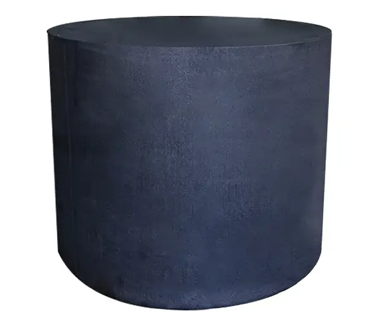
Fine grained graphite is extensively used in vacuum furnaces and high-temperature processing equipment where materials are exposed to temperatures exceeding 2000°C. In such settings, graphite components like furnace liners, heating elements, susceptors, and workpiece holders must maintain dimensional stability and resist degradation.
Thanks to its thermal stability and low thermal expansion, fine grained graphite provides consistent performance under extreme heat and vacuum conditions. It ensures uniform temperature distribution, minimizes thermal stress, and maintains high purity environments by avoiding contamination during heat treatment and sintering processes.
Chemical processes involving harsh reagents such as strong acids, alkalis, halogen gases, and molten salts require materials that resist corrosion and chemical attack. Fine grained graphite’s excellent chemical inertness and low impurity levels allow it to withstand these aggressive chemical environments effectively.
Graphite parts are commonly used as reactor linings, seals, and crucibles in chemical vapor deposition (CVD), electrochemical processes, and corrosive gas handling. Their resistance to chemical degradation helps prevent contamination of sensitive reactions and reduces the frequency of equipment replacement.
In advanced manufacturing, fine grained graphite plays a critical role in sintering furnaces, crystal growth chambers, and metal casting molds. During sintering, graphite fixtures provide stable and uniform heat distribution, enabling precise control of material densification.
For crystal growth processes, such as silicon wafer pulling or LED production, fine grained graphite’s high purity and dimensional stability are essential to maintain the quality and structure of the crystals. Additionally, in metal casting, graphite crucibles and molds must endure high temperatures, thermal shock, and chemical interactions with molten metals, all areas where fine grained graphite’s properties shine.
When selecting materials for high-temperature and harsh chemical environments, industries often consider ceramics, metals, composites, and graphite. Each material offers unique advantages and limitations:
Ceramics like alumina or silicon nitride have excellent hardness and chemical resistance but tend to be brittle, making them susceptible to cracking under thermal shock or mechanical stress. Their machinability is limited, which restricts design flexibility.
Metals such as stainless steel or Inconel alloys provide good mechanical strength and can withstand high temperatures, but they often suffer from oxidation, corrosion, and weight concerns. Metals also generally have higher thermal expansion rates, leading to dimensional instability during rapid temperature changes.
Composites can combine various materials to optimize strength and thermal resistance, but their manufacturing complexity and cost can be high, and their performance under extreme chemical environments varies depending on composition.
In contrast, fine grained graphite offers a unique combination of properties. It exhibits outstanding thermal conductivity, exceptional resistance to chemical attack, and superior tolerance to thermal shock, making it more resilient in fluctuating temperatures and reactive atmospheres than many ceramics or metals.
Fine grained graphite’s fine microstructure allows for precise and intricate machining. This is a major advantage over ceramics and composites, which often require costly and time-consuming fabrication techniques. The ability to machine graphite into complex shapes with tight tolerances enables custom designs tailored to specific industrial needs.
Moreover, graphite’s low coefficient of thermal expansion means components experience less dimensional change during heating and cooling cycles. This ensures stability and accuracy in processes where even minor distortions can impact product quality.
Another significant benefit of fine grained graphite is its low density compared to metals and ceramics. This lightweight nature reduces the overall weight of industrial equipment, which can lead to easier handling, reduced mechanical stress on supporting structures, and lower energy consumption during operation.
Despite being lightweight, fine grained graphite maintains excellent mechanical strength and durability, able to withstand repeated thermal cycling and mechanical wear without degrading, making it a cost-effective material choice for long-term industrial use.
While fine grained graphite inherently possesses many desirable qualities, further enhancements are often applied to extend its capabilities in extreme environments.
Silicon Carbide (SiC) Coatings: Applying a SiC coating to fine grained graphite dramatically improves its oxidation resistance, chemical inertness, and surface hardness. SiC-coated graphite parts can withstand higher temperatures and more aggressive chemical atmospheres, making them ideal for semiconductor manufacturing, vacuum furnace components, and aerospace applications.
Resin Impregnation: To improve the mechanical strength, density, and impermeability of graphite, resin impregnation is commonly used. This process fills the porous structure of graphite with a polymer resin, enhancing resistance to gas and liquid infiltration, improving wear resistance, and increasing structural integrity. This is particularly useful in corrosive chemical processing and applications requiring leak-tight components.
The decision to use coated or impregnated fine grained graphite depends on the specific operating conditions and performance requirements:
For applications involving high-temperature oxidation or aggressive plasmas, SiC-coated graphite provides a protective barrier that significantly extends component life.
In scenarios where chemical infiltration or gas permeability poses risks, resin-impregnated graphite offers improved sealing properties and mechanical robustness.
Enhanced graphite is also preferred in high-precision environments where surface finish and dimensional stability are critical, such as in semiconductor wafer handling or high-purity chemical reactors.
These enhancements enable fine grained graphite to meet or exceed the demands of some of the harshest industrial environments, reinforcing its position as a versatile and reliable engineered material.
Fine grained high-purity graphite represents a pinnacle of engineered materials designed to perform in the most demanding thermal and chemical environments. Its isotropic microstructure, ultra-low impurities, superior thermal shock resistance, and machinability make it uniquely suited for vacuum furnaces, chemical reactors, sintering processes, and crystal growth applications.
Compared to ceramics, metals, and coarse graphite, fine grain graphite offers a balanced package of strength, stability, and precision machining capabilities. With further enhancements such as SiC coatings and resin impregnation, its utility extends even further into extreme conditions.
For companies seeking reliable, high-performance graphite solutions tailored to harsh industrial applications, trusted suppliers like SIAMC Advanced Materials Co., Ltd. provide expert guidance and customized product offerings. Leveraging their advanced manufacturing capabilities and quality controls ensures your projects benefit from the best material properties, leading to longer service life, improved process stability, and optimized cost-efficiency.
To explore fine grain graphite options designed for your specific needs, contact SIAMC and discover how advanced materials can help you conquer the toughest challenges.


