
- Home
- Products
- Solutions
- About
- Service
- Sustainability
- News
- Contact Us

Views: 0 Author: Site Editor Publish Time: 2026-07-05 Origin: Site


In silicon carbide (SiC) semiconductor manufacturing, precision dictates everything. A single microscopic flaw easily compromises an entire production run. Source material contamination remains a primary driver of crystal defects, directly impacting wafer yield and bottom-line profitability. Synthesizing SiC via Physical Vapor Transport (PVT) or other advanced methods demands a meticulously engineered carbon source. Standard industrial graphite simply falls short in these extreme environments. High temperatures require carbon materials to perform flawlessly without introducing foreign atoms into the sensitive lattice structure. We will explore how to assess these crucial precursor materials effectively. Process engineers and procurement teams will gain an evidence-based framework to evaluate and source optimal carbon elements. You will learn exactly what parameters separate exceptional precursor materials from unreliable alternatives. We will guide you through the technical nuances necessary to stabilize your supply chain and maximize your prime wafer output.
Sub-ppm trace element control (especially Boron, Aluminum, and Iron) is non-negotiable for semiconductor-grade SiC yields.
Particle size distribution (PSD) and graphitization degree directly dictate the reaction kinetics and sublimation rates during the PVT process.
Evaluating a supplier requires looking beyond a single Certificate of Analysis (COA) to assess batch-to-batch consistency, capacity scaling, and analytical testing methodologies.
Choosing the right graphite powder for SiC balances extreme technical compliance with supply chain reliability.
The success of your boule directly hinges on your raw inputs. Impurities in the carbon source quickly translate into catastrophic structural defects. You will see micropipes, stacking faults, and basal plane dislocations emerge in the final crystal lattice. Micropipes act as hollow tubes running through the crystal. They cause immediate short circuits in high-power applications. Stacking faults disrupt the crystalline sequence. These faults degrade carrier mobility and increase device on-resistance. Basal plane dislocations propagate through the epitaxial layers. They lead to severe forward voltage degradation in bipolar devices. Every single one of these defects can originate from contaminated source material.
Thermal and electrical consequences naturally follow these physical structural defects. When carbon sublimates unevenly, local carbon-to-silicon ratios fluctuate wildly across the reaction zone. This chemical imbalance dramatically alters both the resistivity and the thermal conductivity of the resulting semiconductor substrate. The final wafer often fails to meet stringent power electronic specifications. Devices built on these substrates struggle to dissipate heat uniformly, causing rapid failure under heavy electrical loads.
This dynamic fundamentally shifts the yield versus cost equation. Procurement teams might attempt to source cheaper, under-purified materials to save upfront expenses. However, cheap graphite leads directly to rejected boules. Material savings become mathematically counterproductive when you lose thousands of dollars on a single failed production run. Quality SiC Crystal Growth requires uncompromising purity from day one. You must treat precursor powder as a core structural component rather than a simple bulk consumable.
We must first define the absolute baseline for material acceptance. Standard industrial graphite is entirely insufficient for these high-stakes applications. Semiconductor Graphite requires purity levels typically exceeding 99.999% (5N) to 99.9999% (6N). A 5N rating means the material contains only 10 parts per million of total impurities. A 6N rating leaves just 1 part per million. Industrial grade materials usually hover around 99.9% (3N), carrying 1000 ppm of ash. This 3N material will instantly poison a PVT reactor.
Achieving these low-ash specifications requires intensive halogen purification. Exposing the raw carbon source to high-temperature halogen gases, like chlorine or fluorine, strips away residual metals. The gases react with metal impurities to form volatile metal halides. These halides safely exit the furnace exhaust. This rigorous purification process guarantees high-temperature stability during subsequent sublimation.
Specific D10, D50, and D90 metrics strongly affect packing density and overall reactive surface area. The D50 metric represents the median particle size. The D10 and D90 metrics represent the fine and coarse limits of your powder batch. If the D10 value drops too low, excessive fine dust blocks the microscopic vapor channels in the crucible. If the D90 value climbs too high, large chunks reduce the total reactive surface area.
You can directly correlate this particle size data to the sublimation rate. Irregular or excessively fine powder often causes uneven mass transport. These physical inconsistencies trigger parasitic reactions during SiC synthesis. You need highly controlled particle morphology to stabilize the growth interface. A narrow bell curve in the PSD ensures optimal packing density. Optimal packing allows uniform gas flow. Uniform gas flow guarantees a stable and predictable sublimation rate.
Structural order heavily dictates thermal stability and reactivity with silicon vapor. Graphitization measures how well the carbon atoms align into perfectly stacked hexagonal planes. Amorphous carbon behaves unpredictably under extreme heat. It outgasses volatile compounds. It releases carbon at highly erratic rates. A highly ordered crystalline structure firmly resists premature thermal degradation.
Higher graphitization significantly reduces outgassing. It also ensures predictable carbon release at standard PVT operating temperatures. These environments typically range between 2000°C and 2400°C. If the graphitization degree varies across the batch, you risk erratic carbon saturation levels. Predictability stabilizes the crucial vapor ratio right above the seed crystal.
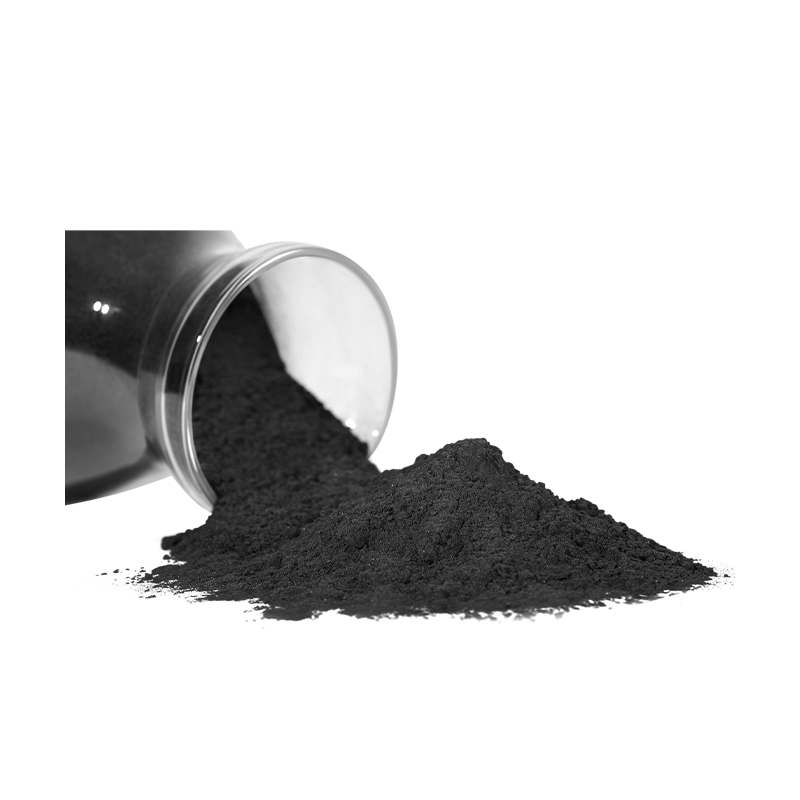
Not all impurities cause the same type of damage. Understanding specific elemental limits helps process engineers tune their acceptance criteria. Here is a breakdown of the critical thresholds and their associated failure mechanisms.
Impurity Category | Specific Elements | Acceptable Limit (ppm) | Primary Defect Mechanism |
|---|---|---|---|
Dopant Impurities | Boron, Aluminum, Nitrogen | < 0.1 | Alters electronic bandgap and local substrate resistivity |
Transition Metals | Iron, Titanium, Vanadium | < 0.05 | Forms deep-level traps and destructive microscopic inclusions |
Alkali Metals | Sodium, Potassium | < 0.1 | Causes severe lattice stress and isolated point defects |
You must heavily restrict dopant impurities like boron, aluminum, and nitrogen. Boron and aluminum naturally act as p-type dopants. If they contaminate a semi-insulating or n-type substrate, they completely ruin the intended electrical specifications. Unwanted nitrogen incorporation acts as an n-type dopant. Uncontrolled nitrogen throws off your precise conductivity profile, rendering the substrate useless for specific device classes.
Transition metals pose equally severe risks. Iron, titanium, and vanadium create deep-level electron traps within the lattice. These traps capture and delay charge carriers. They drastically lower the carrier lifetime of the final device. High-voltage power devices rely heavily on extended carrier lifetime for optimal efficiency. Any metallic inclusion also creates a physical stress point. These micro-stress points often crack apart during subsequent wafer slicing processes.
Advanced analytical verification protects your entire production line. Standard wet chemistry completely fails to verify these stringent sub-ppm limits. Wet chemistry requires dissolving the graphite in harsh acids, which inherently introduces external blank contamination. You must rely on Glow Discharge Mass Spectrometry (GD-MS) or Inductively Coupled Plasma Mass Spectrometry (ICP-MS). GD-MS directly analyzes the solid sample. It fires argon ions at the graphite, ionizing the surface atoms. A mass spectrometer then accurately reads these atoms down to parts-per-billion levels.
Securing a high-quality supplier goes beyond reviewing a single perfect sample. You face significant operational risks when scaling up production. Engineers must proactively anticipate and mitigate these challenges before they impact the factory floor.
The scale-up trap: Many suppliers excel at producing a flawless 1kg R&D sample. They carefully hand-purify small laboratory batches. However, they easily fail to maintain 5N purity in metric-ton production batches. Commercial-scale furnaces introduce massive contamination vectors. You must thoroughly evaluate their bulk production track record.
Homogeneity risks: Intra-batch variation presents a major invisible threat. You might find excellent purity on one side of a storage drum, but high iron content on the other. Inconsistent powder leads to localized temperature gradients in the crucible. These thermal disparities induce severe stress in the growing crystal. They ultimately cause cracking or unwanted polycrystalline formation.
Packaging and handling contamination: Highly purified powder acts like a sponge for airborne contaminants. If a supplier uses improper packaging materials, they negate the entire high-temperature purification process. Static-free, moisture-barrier vacuum bags remain an absolute necessity for shipping and storage.
Best Practice: Always request multiple samples from distinctly different production lots. Never qualify a new supplier based on a single small-scale batch. You need statistical confidence in their long-term process capability.
Effective mitigation strategy requires actionable verification steps. We strongly recommend running rigorous pilot-scale qualification runs before full adoption. You should also establish strict Service Level Agreement (SLA) parameters within your purchasing contracts. Demand regular statistical process control (SPC) data from the manufacturer. This transparency proves their long-term manufacturing stability. It reveals drifting impurity baselines before they impact your yield.
A highly structured approach prevents costly sourcing mistakes. Graphite Powder Evaluation requires deep operational scrutiny. You must verify their physical capabilities alongside their paperwork.
Audit the purification facility: Assess whether the supplier actually owns their high-temperature halogenation furnaces. Many brokers or low-tier vendors outsource this critical step to third parties. Outsourcing creates split responsibility and introduces transit contamination risks. In-house control strongly correlates with better quality assurance and faster troubleshooting.
Require robust traceability: Top-tier suppliers provide complete lot traceability. They strictly track the material history from the raw petroleum coke or pitch straight through to the final milled powder. High Purity Graphite Powder depends entirely on pristine raw inputs. If they cannot prove the origin of their raw materials, you cannot trust their final purity claims.
Demand transparent COAs: A valid Certificate of Analysis for semiconductor applications goes deep. It must test for at least 15 to 20 specific trace elements. Do not accept a generic "total ash" reading. You need granular elemental breakdowns to model your PVT environment accurately. Verify the detection limits on their testing equipment. If their GD-MS only reads down to 1 ppm, they cannot legally guarantee 0.1 ppm compliance.
Execute a technical consultation: Do not just buy blindly off a specification sheet. Request a deep technical alignment meeting. You must match their production capabilities with your specific PVT furnace design. Ensure their powder morphology and packing characteristics perfectly support your target SiC polytype, whether you focus on 4H-SiC or 6H-SiC growth.
Common Mistake: Procurement teams often jump at a low per-kilogram price without reviewing the underlying analytical methodology. Always dig into the testing procedures. A cheaper powder tested with inferior equipment usually hides yield-destroying impurities.
High purity graphite powder functions as a highly engineered precursor, not a simple bulk commodity. Its physical and chemical characteristics dictate the fundamental success of your SiC synthesis.
Prioritize suppliers who can actually prove long-term batch-to-batch consistency over those merely offering the lowest initial price point.
Implement strict analytical verification protocols within your incoming quality control. Rely heavily on GD-MS data rather than generic ash content reports.
Align your procurement criteria directly with your process engineers. You must ensure the particle size distribution and graphitization levels perfectly match your specific reactor dynamics.
Your next steps require decisive action. Initiate a comprehensive audit of your current carbon source COAs today. Schedule technical alignment calls with your prospective vendors to review their capabilities. Require statistical process control data for their last ten production batches before committing to any new commercial-scale contract.
A: Typically, 99.999% (5N) is the absolute minimum requirement. For advanced power electronics, manufacturers highly prefer 99.9995% or higher. These extreme purity levels prevent critical lattice defects and ensure uniform electrical properties across the final wafer.
A: It directly determines the porosity and packing density of the source material inside the crucible. This physical structure governs the sublimation rate and ensures consistent mass transport of carbon vapor to the seed crystal. An optimized distribution successfully prevents parasitic reactions.
A: GD-MS directly analyzes the solid sample without requiring chemical dissolution. This dry process minimizes the risk of introducing external contaminants during testing. It accurately measures trace metals at the critical parts-per-billion (ppb) level, ensuring strict compliance with semiconductor standards.
A: The industry predominantly requires synthetic graphite. The synthetic manufacturing process allows for much tighter control over initial impurities. It also provides superior structural consistency compared to natural mined graphite, which naturally contains highly variable mineral contaminants.


