
- Home
- Products
- Solutions
- About
- Service
- Sustainability
- News
- Contact Us

Views: 0 Author: Site Editor Publish Time: 2026-07-15 Origin: Site


Specifying raw materials for advanced technology sectors requires strict contamination control at every production stage. Engineers designing next-generation lithium-ion batteries, nuclear reactors, and complex semiconductors cannot tolerate even microscopic material defects. Minor trace metals often trigger devastating cascading failures in the field. In the highly specialized context of High Purity Graphite Powder, hitting a "5 ppm" (parts per million) limit represents an ultra-high purity threshold. This exact metric translates to a 99.9995% carbon content baseline. Recognizing this stringent standard helps engineering teams prevent disastrous downstream product failures while ensuring operational safety. In this comprehensive guide, we will unpack how advanced testing facilities accurately measure this stringent purity level. We will explore exactly why this specific grade easily justifies its premium status across critical applications. Finally, you will learn how to strictly evaluate suppliers claiming this advanced specification.
Strict Tolerance: 5 ppm graphite powder means only 5 grams of impurities exist per metric ton of material, translating to 99.9995% purity.
Application Criticality: This threshold is mandatory for minimizing side reactions in battery anodes, preventing neutron absorption in nuclear tech, and ensuring semiconductor yield.
Verification is Key: True high purity claims must be backed by advanced Graphite Purity Testing methods like GDMS or ICP-OES, not just basic ash content analysis.
Supplier Consistency: Evaluating a supplier requires looking beyond a single batch test to their long-term purification stability and anti-contamination packaging protocols.
We must first break down the mathematical reality of a 5 ppm specification. A standard industrial grade often registers at 99.9% carbon. This sounds impressive to a layperson. However, it leaves 1,000 parts per million (ppm) of impurities in the batch. Pushing the material to 99.9995% carbon drops that contamination down to just 5 ppm. This massive reduction fundamentally changes how the material behaves under stress.
What makes up those final five parts per million? They are rarely harmless organic non-metals. Instead, you typically find highly reactive trace metallic elements. Even at microscopic levels, these specific metals act as catalysts for unwanted chemical reactions. The most common remaining culprits include:
Iron (Fe): Acts as a magnetic impurity, often causing internal short circuits in energy storage applications.
Silicon (Si): Forms unwanted carbide inclusions under extreme heat, disrupting thermal conductivity.
Aluminum (Al): Alters the structural integrity and electrical resistance of the final composite.
Nickel (Ni) and Vanadium (V): Serve as powerful oxidation catalysts, accelerating material degradation over time.
Procurement teams often rely on basic ash content analysis to verify purity. This creates a dangerous blind spot in advanced manufacturing. Ash testing simply burns the graphite in a crucible and weighs the leftover oxide residue. It offers a cheap and fast baseline. However, it cannot identify which specific elemental impurities remain. A 5 ppm specification demands granular data. You need a detailed elemental breakdown to truly assess application risks. Standard ash testing simply lacks the detection sensitivity required at this elite level.
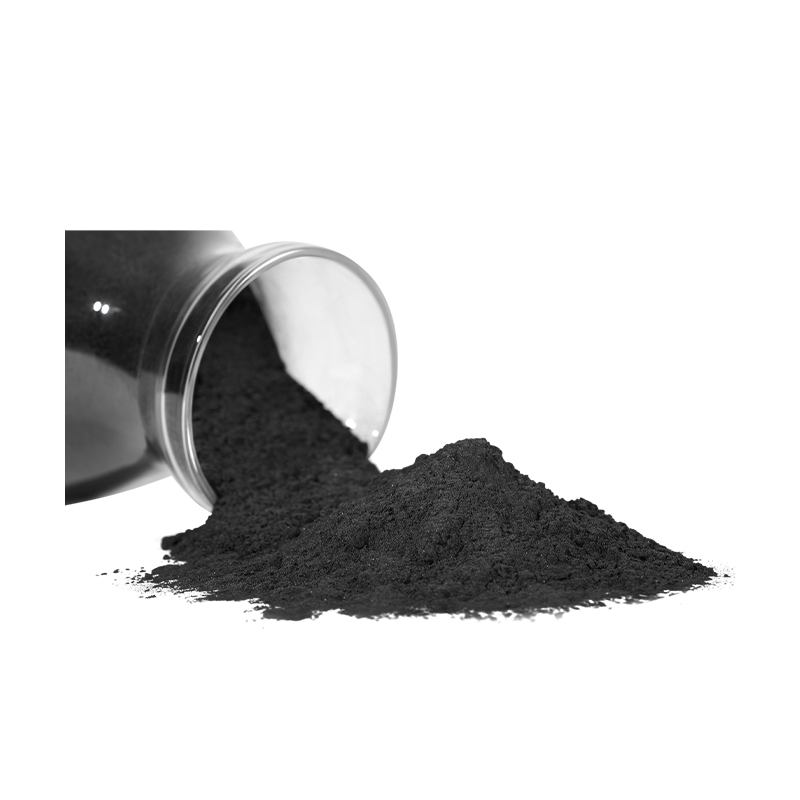
Advanced industrial applications push raw materials to their absolute physical limits. In these extreme environments, sourcing 5 ppm Graphite Powder transitions from a luxury choice to a hard engineering requirement. Cutting corners on purity introduces unacceptable failure points.
Consider the architecture of next-generation lithium-ion batteries. Manufacturers use graphite extensively as the primary anode material. Trace metals like iron cause severe problems inside these battery cells. They penetrate the delicate Solid Electrolyte Interphase (SEI) layer. Once embedded, they catalyze unwanted electrochemical side reactions. These reactions lead to rapid self-discharge, significantly reducing the battery's overall lifecycle. In worst-case scenarios, these magnetic impurities cause internal short circuits. This directly triggers dangerous thermal runaway events. A strict 5 ppm limit effectively mitigates these critical failure mechanisms.
Nuclear and aerospace sectors face even tighter safety constraints. In nuclear moderation, engineers use massive graphite blocks to slow down fast neutrons. Specific impurities act as severe neutron poisons. Boron is highly problematic because it absorbs neutrons incredibly well. Engineers strictly monitor the "Boron Equivalent" of all reactor materials. If boron levels exceed microscopic limits, the controlled nuclear reaction stalls. Ultra-high purity is entirely non-negotiable here. It ensures predictable, safe, and sustained neutron moderation over decades of operation.
Semiconductor and synthetic diamond manufacturers rely heavily on yield protection to maintain profitability. They use graphite in crucial crucible materials and as carbon sources for High-Pressure High-Temperature (HPHT) presses. Trace contaminants easily migrate out of the graphite during these extreme thermal cycles. This migration directly degrades the delicate crystalline lattice of the final semiconductor wafer or synthetic diamond. A few parts per million of silicon or iron will cause visible inclusions. These inclusions destroy the optical clarity and electrical properties of the end product.
Achieving this elite metallurgical state requires intense and specialized processing. Facilities generally utilize two distinct approaches to execute advanced Graphite Purification. Each method carries unique advantages and specific residual risks.
Chemical processing, commonly known as acid leaching, utilizes harsh reagents. Suppliers use strong acids like hydrofluoric or sulfuric acid to dissolve metal impurities. It works exceptionally well for reaching standard grades around 99.9%. However, it risks leaving residual halogens or sulfur compounds behind. Operators must execute the washing phase perfectly to avoid secondary contamination.
Conversely, high-temperature thermal processing offers a superior alternative for the 5 ppm threshold. Facilities heat the raw material in specialized vacuum furnaces exceeding 2,500°C. They often inject halogen gases into the chamber. This intense heat vaporizes stubborn metallic impurities into volatile metal halides. The vacuum system then extracts these gases completely. While highly effective at eliminating metals and halogens, it consumes massive amounts of electricity. This immense energy usage naturally drives up the final material cost.
Purification Method | Typical Purity Limit | Primary Mechanism | Residual Risks & Drawbacks |
|---|---|---|---|
Standard Chemical Leaching | 99.9% (1000 ppm) | Acid dissolution of metallic oxides | Residual halogens, sulfur, high environmental footprint |
Advanced Acid/Alkali Treatment | 99.99% (100 ppm) | Multi-stage chemical washing and baking | Requires massive water usage for final rinsing |
High-Temperature Thermal | 99.9995%+ (< 5 ppm) | Vaporization of impurities at >2,500°C | Extremely high energy costs, specialized furnace requirement |
Buyers must carefully weigh component performance against their initial material expenditure. You should objectively evaluate whether your specific SKUs truly require a 5 ppm threshold. Sometimes, a standard 50 ppm (99.99%) grade provides sufficient baseline performance for less demanding tasks. Using ultra-high purity grades for standard conductive coatings or basic lubricants wastes resources. Over-engineering your raw materials strains procurement budgets without delivering tangible end-product improvements.
You cannot manage what you cannot accurately measure. Validating a 99.9995% purity claim requires highly sophisticated analytical frameworks. Basic industrial laboratory setups simply cannot detect trace elements at these microscopic parts-per-billion levels.
Credible Graphite Purity Testing relies on specialized spectroscopy techniques. Glow Discharge Mass Spectrometry (GDMS) stands out as a premier evaluation method. It directly analyzes solid graphite samples by bombarding them with argon ions. It detects ultra-trace metals without requiring complex sample preparation. Inductively Coupled Plasma Optical Emission Spectroscopy (ICP-OES) also provides highly accurate elemental breakdowns. However, ICP-OES requires digesting the graphite in strong acids first. This digestion step sometimes introduces unwanted background noise if the acids are not perfectly pure.
Established industry standards provide a crucial baseline for testing methodologies. Respectable facilities strictly follow ASTM guidelines for precise carbon analysis. For example, ASTM C561 outlines standard test methods for ash in a graphite sample. Meanwhile, nuclear applications demand even stricter compliance. Suppliers targeting this sector must conform to rigid guidelines published by the International Atomic Energy Agency (IAEA). These frameworks ensure testing consistency across different global laboratories.
You must know how to audit a Certificate of Analysis properly. A trustworthy CoA never relies on a single, vague "99.9995% purity" statement. It provides exhaustive metallurgical evidence. When reviewing a CoA, strictly check for these elements:
Explicit Detection Limits: The document must list the Limit of Detection (LOD) for every individual metallic element tested.
Batch Traceability: Ensure the laboratory testing dates align perfectly with your specific production batch numbers.
Accreditation Stamps: Look for ISO 17025 certification, which guarantees the testing laboratory maintains properly calibrated diagnostic equipment.
Boron Equivalent Metrics: If purchasing for nuclear or semiconductor applications, verify the exact calculation of neutron-absorbing trace elements.
Finding a technically capable supplier requires deep operational due diligence. The most significant risk in sourcing High Purity Graphite is batch variance. A single perfect delivery means nothing if the subsequent shipment fails your intake quality tests.
Always request historical statistical process control (SPC) data from potential partners. This documentation proves they can maintain ultra-high purity across dozens of consecutive production runs. Look closely at their Cpk (process capability index) values. Tight data clusters indicate a mature manufacturing partner with excellent furnace control. Wild swings in trace metal content highlight poorly managed purification parameters.
Poor handling protocols easily ruin a pristine 5 ppm specification. This sensitive material requires rigorous cleanroom packing procedures. Exposure to regular warehouse air introduces immediate particulate contamination. Suppliers must utilize vacuum sealing techniques immediately after the material cools. They should package the powder in anti-static, high-density polyethylene (HDPE) bags. They must absolutely ensure their packaging liners remain entirely free of surface trace metals before filling.
Finally, carefully assess their true production scalability. Moving from a ten-kilogram R&D sample to a ten-ton commercial order changes the thermal dynamics entirely. Larger furnace loads often struggle to achieve uniform purification temperatures in the center of the batch. Ensure the supplier possesses dedicated industrial-scale vacuum furnaces. They must demonstrate the capacity to handle large commercial orders without introducing purity degradation or causing unacceptable supply chain bottlenecks.
The 5 ppm purity label represents much more than clever industrial marketing. It defines a highly controlled metallurgical state requiring intense processing and fully transparent laboratory validation. True 99.9995% carbon content eliminates the reactive trace metals responsible for field failures. Investing in verified ultra-high purity graphite successfully mitigates catastrophic downstream issues in high-stakes manufacturing environments. You protect your production line by treating raw material specifications with the utmost scrutiny. We highly recommend consulting your engineering team to establish exact elemental limits for your specific application. Reach out to your supplier today to request a detailed technical data sheet, a sample CoA, or a specialized technical consultation.
A: Standard chemical leaching struggles to hit this mark consistently. While acid leaching effectively reaches 99.9% (1,000 ppm) or even 99.99% (100 ppm), the 5 ppm threshold is far more demanding. Pushing impurities below 5 ppm almost always requires advanced high-temperature thermal purification. This thermal approach vaporizes stubborn trace metals and halogens that chemical baths simply leave behind.
A: Both applications demand ultra-high purity, but their elemental focus differs completely. Nuclear-grade specifications strictly monitor "Boron Equivalent" impurities. These elements act as unwanted neutron absorbers, which disrupt delicate reactor moderation. Conversely, battery-grade graphite focuses heavily on eliminating magnetic impurities. Trace amounts of iron, nickel, or cobalt in battery materials easily cause internal short circuits and thermal runaway.
A: Immediate contamination occurs upon exposure to ambient air. While the graphite will not magically absorb heavy metals from the atmosphere, its porous nature causes rapid problems. It readily absorbs ambient moisture and microscopic airborne particulate dust. This instantly compromises your carefully validated 5 ppm baseline. Processing and handling this material strictly requires controlled cleanroom environments to preserve its integrity.


